Art Shipping: How to Pack and Ship Safely (Step-by-Step)
Learn how to safely pack and ship artwork. Professional techniques for framed pieces, canvas paintings, and sculptures.
By Austin Gallery
Shipping artwork is one of the most anxiety-inducing moments in any collector's, dealer's, or estate executor's journey. A painting that survived a century on someone's wall can be destroyed in forty-eight hours by a careless packer and a rough transit. I have personally packed and shipped thousands of pieces over fifteen years in the art handling business -- from delicate gouaches on rice paper to eight-foot bronze sculptures -- and the difference between a work arriving intact or arriving in pieces almost always comes down to preparation, materials, and method. Not luck.
Double-boxing with proper cushioning is the gold standard for shipping artwork
Always insure art shipments for full value — standard carrier coverage is grossly inadequate
Use acid-free wrapping materials against the artwork surface, then protective layers outside
The reality is that major carriers handle millions of parcels a day, and your artwork is sharing a truck with industrial equipment, cases of wine, and somebody's dumbbell set. Nothing about the logistics chain is designed to be gentle. Your job is to make the package so resilient that it does not matter. This guide will walk you through exactly how professional art handlers pack and ship every type of artwork, which materials to use, which carriers to choose, and when to call in the professionals instead.
Before you touch a single painting, assemble every material you will need. Stopping mid-pack to run to the store is how corners get left unprotected and edges get bumped. Here is the professional art handler's packing kit.
Acid-Free Tissue and Glassine Paper
Any material that touches the artwork surface must be chemically inert. Standard tissue paper, newspaper, and brown kraft paper are all acidic and will stain, yellow, or chemically degrade art surfaces over time -- even during a short transit. Lineco Acid-Free Interleaving Tissue is the conservator's standard. Use it as the first layer against any painted, printed, or drawn surface. For oil paintings and acrylics with textured impasto, layer tissue loosely so it does not press into the surface.
Lineco Acid-Free Interleaving Tissue is the conservator's standard.
Glassine Paper (Lineco 16x20 Sheets) provides a smooth, translucent, moisture-resistant barrier. It is the standard interleaving material used in museum print rooms and shipping departments worldwide. Place glassine directly over the face of works on paper, photographs, and prints before wrapping with tissue. For larger works, consider a glassine roll that you can cut to size.
Handle every piece with Cotton Inspection Gloves. Skin oils, sweat, and microscopic salt crystals transfer instantly to paper, canvas, bare metal, and gilded frames. These fingerprints may be invisible today but will appear as permanent stains within months. Wear gloves every time you handle original artwork, even if you are "just moving it across the room."
Duck Brand Bubble Wrap (12" x 30') is the cushioning layer that absorbs impacts during transit. Always place a barrier layer of acid-free tissue or glassine between the bubble wrap and the artwork surface -- never let plastic touch paint, ink, or photographic emulsions directly. The bubbles can imprint onto soft surfaces, and plastic traps moisture that promotes mold growth. Use at least two layers of bubble wrap around every piece, with the bubble side facing outward (away from the art).
Corners are the most vulnerable part of any framed work. They absorb the brunt of impacts, and a single dented corner can crack glass, split frame joinery, and send shock waves through the canvas. Golden State Art Adjustable Cardboard Corner Protectors (100 Pack) fit frames from 1 inch to 2.1 inches deep and fold in seconds. Apply them to all four corners of every framed piece before wrapping. For high-value works, double up with foam corner protectors over the cardboard ones.
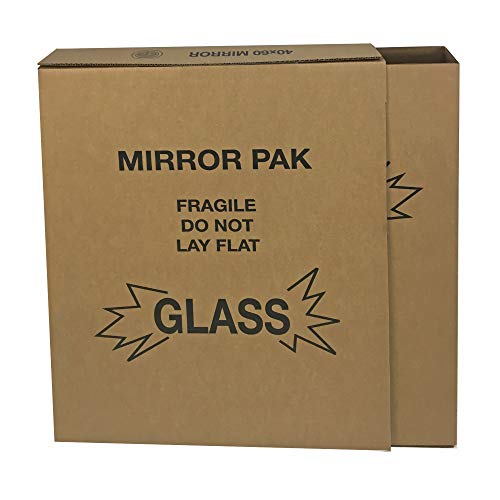
Standard moving boxes are not designed for flat artwork. They are too deep, too flimsy, and the wrong proportions. Purpose-built picture and mirror boxes like the UBOXES Mirror and Picture Boxes (5-Pack) are telescoping, adjustable, and made from heavier corrugated cardboard rated for the weight of framed art. These boxes adjust to fit works up to 30 by 40 inches and provide the tight, secure fit that prevents shifting during transit -- the number one cause of damage in shipping.
For framed art with glass, apply painter's tape in an X pattern across the glass face. If it breaks in transit, the tape holds shards in place and protects the art.
Seal every seam, edge, and flap with Scotch Heavy Duty Shipping Tape (6-Pack). This 3.0-mil tape has solvent-free adhesive that grips corrugated cardboard aggressively and does not peel in cold or hot conditions. Run tape along every seam of the box, then add a second strip perpendicular across the bottom center for reinforcement. Never use masking tape, duct tape, or cellophane tape for shipping -- they fail under stress and temperature changes.
Every medium and format demands a slightly different approach. Here is how to pack each one correctly.
Framed Works with Glass or Acrylic Glazing
Glass is the biggest risk factor in shipping framed art. If it breaks, the shards will slice through the artwork underneath. Professional handlers always take this precaution:
Tape the glass. Apply painter's tape in an asterisk pattern (an X plus a horizontal and vertical strip) across the entire face of the glass. If the glass breaks, the tape holds the shards in place instead of letting them rain down onto the artwork. Use low-tack painter's tape only -- regular masking tape will leave residue on glass.
Apply corner protectors to all four corners of the frame.
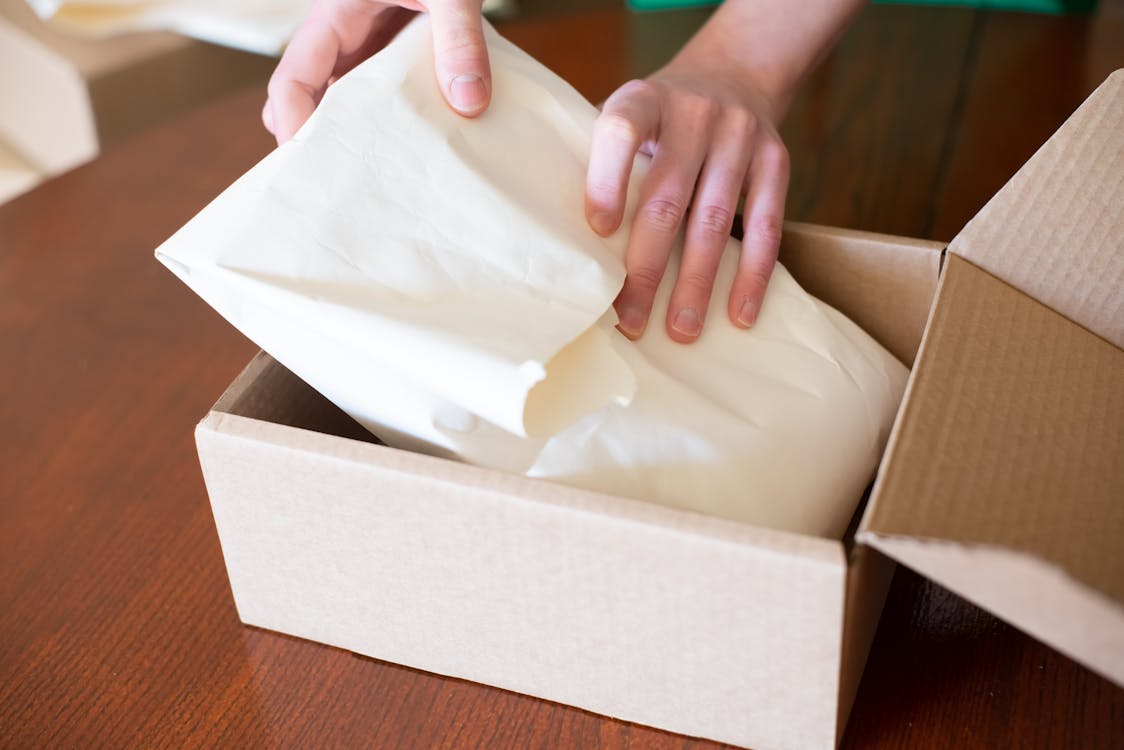
Wrap in acid-free tissue, covering the entire piece including the back.
Wrap in bubble wrap -- minimum two layers, bubble side out, secured with tape.
Place in an art box sized to the frame with no more than 2-3 inches of clearance on each side.
Fill void space with crumpled acid-free tissue, kraft paper, or foam sheets. The piece should not shift even slightly when you shake the box.
For works with museum glass or anti-reflective glazing, use even more caution. These specialty glasses are thinner and more expensive to replace than standard picture glass.
Unframed Works on Paper (Prints, Drawings, Watercolors)
Works on paper are extremely vulnerable to moisture, bending, creasing, and surface abrasion. They must be kept flat and rigid during transit.
Interleave with glassine directly over the image surface.
Sandwich between two pieces of acid-free mat board or foam core cut slightly larger than the artwork. Tape the boards together along the edges to create a rigid "envelope."
Wrap the rigid sandwich in acid-free tissue, then in bubble wrap.
Ship flat in a box that fits the rigid sandwich snugly. Never roll a valuable work on paper unless a conservator has specifically advised it for that piece.
For multiple works on paper going to the same destination, interleave each piece with tissue, stack them between rigid boards, and ship the entire stack in a single well-padded box. This actually provides better protection than shipping individually because the mass resists impact forces more effectively.
Canvas Paintings (Unframed or Stretched)
Unframed canvases on stretcher bars are more resilient than you might think, but they have specific vulnerabilities: the canvas face can be punctured or dented, and the stretcher bars can crack at the corners.
Place acid-free tissue over the painted surface, then lay a piece of stiff cardboard cut to the exact size of the stretcher bars over the face as a rigid protector.
Wrap the entire piece in bubble wrap, at least two layers.
Protect the corners with foam or cardboard corner protectors.
Place in a snug box with cushioning material filling all voids.
For unstretched (rolled) canvases, roll them paint-side out around a rigid cardboard tube with a minimum diameter of 4 inches. Larger is better -- the gentler the curve, the less stress on the paint layer. Place a layer of acid-free tissue between the canvas and the tube, and another layer over the painted surface before rolling. Ship the tube inside a telescoping shipping tube or a box with foam end caps.
Sculpture is the most challenging category to ship safely because every piece has a unique geometry, weight distribution, and set of fragile points.
Wrap all protruding elements individually with acid-free tissue, then bubble wrap. Arms, fingers, handles, bases, and thin extensions are the most vulnerable.
Create a "nest" of bubble wrap and foam inside the box before placing the sculpture. The piece should float in cushioning material, touching no wall of the box.
Fill all remaining void space so the piece cannot shift in any direction.
Use the double-box method (described below) for anything fragile, heavy, or valuable.
For large or heavy sculptures exceeding 50 pounds, skip the box entirely and have a custom crate built. This is not optional for serious work -- it is the only responsible approach.
Austin Art Insider
Free weekly guide to galleries, exhibitions & collecting in Austin.
The double-box method is the single most effective technique for protecting art in transit, and it is what every museum, gallery, and professional art handler uses for valuable shipments. The concept is simple: pack the artwork in one box, then place that box inside a larger box with cushioning between them.
Pack the artwork in an appropriately sized inner box using the methods above.
Select an outer box that is at least 3 inches larger on every side than the inner box.
Line the bottom of the outer box with 3 inches of crumpled paper, foam peanuts, or foam sheets.
Center the inner box on this cushioning layer.
Fill the sides and top with the same cushioning material, ensuring a minimum of 3 inches of cushioning on all six sides.
Seal the outer box thoroughly with shipping tape on every seam.
This method means any impact to the outer box must travel through 3 inches of cushioning before it even reaches the inner box, which itself contains cushioning around the artwork. The artwork effectively has two complete zones of protection. For high-value works, this is non-negotiable.
Not all shipping carriers handle art equally. Here is what you need to know about each option.
FedEx
FedEx is the preferred carrier for most professional art shippers, and for good reason. Their FedEx Custom Critical service provides white-glove, air-ride, climate-controlled transport for high-value shipments. For standard shipments, FedEx Ground and FedEx Express both offer declared value coverage up to $50,000. FedEx also operates dedicated art logistics through FedEx Custom Critical, including inside delivery and specialized handling. Their tracking is reliable and their damage claim process, while never pleasant, is more straightforward than some competitors.
$50,000
For standard shipments, FedEx Ground and FedEx Express both offer declared value coverage up to
Best for: Most art shipments, high-value works, time-sensitive deliveries.
UPS
UPS is comparable to FedEx for standard art shipments and often slightly cheaper for ground service. They offer declared value protection up to $50,000 per package through their standard service. UPS also partners with The UPS Store network, which provides professional packing services at retail locations -- useful if you need hands-on help and are not comfortable packing yourself. However, UPS tends to have slightly higher damage rates for oversized packages in some corridors, based on industry experience.
Best for: Budget-conscious shipments, works under $5,000 in value, domestic ground.
USPS
The United States Postal Service is the least suitable carrier for original artwork. Their maximum insurance coverage is $5,000. Package handling is rougher on average because USPS processes higher volumes through automated sorting equipment not designed for oversized flat parcels. That said, USPS Priority Mail is acceptable for smaller, lower-value works -- matted prints, small framed photographs, and similar items under $1,000 in value -- as long as they are packed to professional standards.
Best for: Small prints and photographs under $1,000, shipping to PO boxes, budget shipments where risk is acceptable.
Carrier Recommendations by Value
Artwork Value
Recommended Carrier
Service Level
Under $500
UPS Ground or USPS Priority
Standard
$500 - $5,000
FedEx Ground or UPS Ground
Declared value
$5,000 - $25,000
FedEx Express or UPS 2nd Day
Declared value + third-party insurance
$25,000+
Professional art shipper
White-glove, climate-controlled
Insurance: Declared Value vs. Third-Party Coverage
Carrier "declared value" coverage is not insurance in the traditional sense. It is the carrier's liability limit if they damage or lose your package. The claims process can be slow, contentious, and often results in partial payouts. For any work valued above $5,000, supplement carrier liability with third-party fine art shipping insurance.
Arta offers specialized art transit insurance with streamlined claims and coverage that begins the moment the piece leaves your hands and ends when it is hung on the recipient's wall. Berkley Asset Protection is another major provider favored by galleries and auction houses for comprehensive fine art coverage.
For a deeper dive into coverage options, deductibles, and what constitutes "adequate documentation" for a claim, read our guide on art insurance explained.
Documentation Before Shipping
Before any artwork leaves your possession, create a complete condition report:
Photograph the artwork from the front, back, all four edges, and every corner. Include close-ups of any existing damage, scratches, or wear.
Photograph every stage of packing -- the artwork wrapped, in the inner box, the inner box in the outer box, and the sealed final package.
Record dimensions and weight of the final package.
Save all receipts for materials, shipping labels, and insurance.
Email the photos to yourself with a date stamp so you have a timestamped digital record.
This documentation is your evidence in any damage claim. Without it, carriers and insurers will dispute everything.
Professional Art Shippers vs. DIY: When to Call the Experts
For most works under $5,000, competent DIY packing following this guide is perfectly adequate. But there are situations where professional art shippers are worth every penny of their premium pricing.
When to Use a Professional
Value exceeds $10,000. The cost of professional crating and shipping ($300-$1,500 for domestic) is trivial compared to the potential loss.
The piece is oversized. Anything over 48 inches in any dimension is difficult to handle safely without experience and equipment.
The work is fragile or unusual. Gilt frames, works with relief elements, glass sculpture, multimedia installations, and anything involving moving parts.
International shipping is involved. Customs documentation, export permits, and duty calculations for art require specialized knowledge.
You are shipping multiple works. Estate collections of 10+ pieces benefit enormously from professional soft-packing or crating in a single consolidated shipment.
Recommended Professional Art Shippers
Masterpak -- Industry-leading art packing materials and custom crating, based in New York. They supply museums, galleries, and auction houses worldwide.
uShip Art Shipping -- A marketplace connecting you with vetted, specialized art transport companies. You post your shipment and receive competing bids from qualified handlers.
Craters & Freighters -- National network specializing in custom crating and shipping for high-value, oversized, and fragile items including fine art.
Cadogan Tate -- International art logistics with climate-controlled storage and white-glove installation, offices in New York, London, and Hong Kong.
A custom wooden crate is the gold standard for shipping valuable, oversized, or fragile artwork. Crates provide rigid protection that no amount of bubble wrap inside a cardboard box can match. Here is when crating is the right call:
Any work valued above $25,000
Oversized pieces (over 60 inches in any dimension)
Sculpture and three-dimensional objects over 30 pounds
Works with glass glazing over 36 inches
International shipments where the package will be handled by multiple carriers and customs inspectors
Pieces traveling by freight (LTL or full truckload)
Professional crates are built with plywood walls, internal foam lining custom-cut to the artwork's exact profile, and hardware that allows non-destructive opening and reclosing. Expect to pay $200-$800 for a standard painting crate and $500-$2,000+ for sculpture or oversized works. This is not where you cut corners.
Cost Estimates by Size and Method
Shipping costs vary dramatically based on size, weight, distance, carrier, and service level. Here are realistic ranges for domestic U.S. shipments:
Artwork Size
DIY (Materials + Carrier)
Professional Packing + Shipping
Small (under 18"x24")
$30 - $80
$150 - $300
Medium (24"x36")
$60 - $150
$250 - $500
Large (36"x48")
$100 - $250
$400 - $800
Oversized (48"+)
$200 - $500
$600 - $1,500
Sculpture (under 50 lbs)
$100 - $300
$400 - $1,200
Sculpture (50+ lbs, crated)
Not recommended DIY
$800 - $3,000+
These estimates do not include insurance, which typically runs 1-2% of the declared value for domestic shipments and 2-4% for international.
Climate Considerations: Heat, Cold, and Moisture
Art is physically reactive to its environment, and the inside of a delivery truck can be brutal.
Heat
Summer ground shipments can expose packages to temperatures exceeding 140 degrees Fahrenheit inside a metal truck. At these temperatures, wax-based media (encaustic paintings) can melt, adhesives can fail, varnish can soften and stick to wrapping materials, and photographs can warp and curl. If you are shipping heat-sensitive work during summer months, choose an air service that minimizes time in transit, or wait for cooler weather.
Cold
Freezing temperatures make canvas brittle. A sharp impact during cold transit can crack paint that would normally flex and absorb the shock. Oil paintings are particularly vulnerable because linseed oil becomes rigid below freezing. Ship during moderate weather when possible. If you must ship in winter, allow the package to acclimate to room temperature for 24 hours before opening -- rapid temperature changes cause condensation that can damage art instantly.
Moisture
Humidity inside shipping containers can spike during cross-country transit as the package moves between climate zones. Include silica gel packets inside the inner box to absorb excess moisture. Wrap the artwork in a layer of polyethylene sheeting (a clean garbage bag works in a pinch) as a moisture barrier between the bubble wrap and the outer box.
International Shipping: Customs, Duties, and Documentation
Shipping art across borders introduces a layer of complexity that domestic shipments do not have. Get any of this wrong and your artwork can be held at customs for weeks, taxed heavily, or even seized.
Key Requirements
Commercial invoice listing the artist, title, medium, dimensions, date of creation, and declared value of every piece.
Certificate of authenticity or provenance documentation, if available.
HS tariff code -- original artwork typically falls under HS code 9701 (paintings, drawings, pastels) or 9703 (sculpture), which are duty-free in many countries. Prints and reproductions fall under different codes and may attract duty.
ATA Carnet -- if the art is traveling temporarily (for exhibition, appraisal, or consignment) and will return to the origin country, an ATA Carnet allows duty-free temporary import. Contact the U.S. Council for International Business for Carnet applications.
Export permits -- some countries restrict the export of cultural property. The U.S. is relatively permissive, but if the work was created by a foreign artist or was originally imported, check whether re-export restrictions apply.
Customs Brokers
For shipments valued above $2,500, U.S. Customs requires a formal entry filed by a licensed customs broker. Your professional art shipper will handle this, but if you are shipping DIY, you will need to engage a broker separately. Livingston International and FedEx Trade Networks both handle art-related customs clearance.
Tracking and Communication
Once the package is in transit, your job is not over. Monitor tracking obsessively and communicate proactively with the recipient.
Share the tracking number with the recipient immediately after shipping.
Set up carrier notifications for every scan event -- pickup, departure, arrival at hub, out for delivery.
Coordinate delivery timing so someone is physically present to receive the package. Art should never be left on a doorstep, in a lobby, or at a loading dock unattended.
Require signature confirmation on every art shipment, regardless of value.
Inspect immediately upon delivery. Open the outer box, then the inner box, with the carrier present if possible. Photograph any damage to the packaging before removing the artwork. If there is visible damage to the box, note it on the delivery receipt before signing.
The Packing Checklist
Use this as your final reference before sealing the box:
Artwork photographed and condition documented
Cotton gloves worn during all handling
Glass taped in asterisk pattern (if applicable)
Corner protectors applied to all four corners
Acid-free tissue or glassine placed against artwork surface
Bubble wrap applied (minimum two layers, bubbles out)
Inner box packed with zero shifting space
Silica gel packets included for moisture control
Outer box is 3+ inches larger than inner box on all sides
Cushioning fills all void space between inner and outer boxes
All seams sealed with heavy-duty packing tape
"FRAGILE" and "THIS SIDE UP" clearly marked on all sides
Shipping label protected with clear tape overlay
Insurance purchased and documentation saved
Tracking number shared with recipient
Shipping art safely is entirely a matter of preparation and materials. There is no mystery to it, no secret technique known only to museum professionals. The methods in this guide are the same ones used by conservators at the Smithsonian, registrars at MoMA, and handlers at Christie's. The difference between a professional and an amateur is not knowledge -- it is discipline. Follow every step, skip nothing, and your artwork will arrive exactly as it left.
The methods in this guide are the same ones used by conservators at the Smithsonian, registrars at MoMA, and handlers at Christie's.