A Beginner's Guide to Art Investing: What Every New Collector Should Know (2026 Guide)
Thinking about investing in art? Here's what we've learned from years of helping collectors build meaningful collections—and the mistakes you can easily avoid.
By Austin Gallery
This article contains affiliate links. Austin Gallery may earn a commission at no cost to you.
Art has been a store of value for centuries. Wealthy families passed paintings and sculptures through generations not only because the objects were beautiful but because they held and often increased their worth across decades. Today, the art market is more accessible than it has ever been. Online platforms, fractional ownership services, and a growing number of galleries specializing in affordable original works have lowered the barrier to entry for new collectors. But accessibility does not mean simplicity. The art market operates by its own rules -- opaque pricing, subjective valuations, illiquid holdings, and a culture that can feel deliberately exclusionary to outsiders.
Art investing is a long game — expect to hold pieces for 5-10+ years for meaningful appreciation
Start by collecting what you love, then develop an eye for market trends and emerging artists
Diversify across media, periods, and price points — just like a financial portfolio
Authentication, provenance, and condition are the three pillars of art value
This guide cuts through the mystique. Whether you are drawn to art primarily as an investment, primarily as a source of personal meaning, or some combination of both, the principles below will help you spend wisely, avoid costly mistakes, and build a collection that serves your goals.
The first question every new collector should answer honestly is this: why am I buying art?
If your primary motivation is financial return, you need to understand that art is one of the most illiquid, volatile, and unpredictable alternative asset classes available. The Artnet Price Database tracks millions of auction results and the data is clear -- while certain segments of the market have outperformed equities over specific periods, the average artwork does not appreciate predictably. Transaction costs are high (buyer's premiums, insurance, shipping, storage), holding periods are long, and there is no dividend or coupon while you wait.
Transaction costs are high (buyer's premiums, insurance, shipping, storage), holding periods are long, and there is no dividend or coupon while you wait.
If your primary motivation is passion -- living with objects that move you, supporting artists whose work you believe in, creating an environment that reflects your identity -- then art is one of the best investments you will ever make. The daily return on a piece you love looking at is immeasurable, and if it also appreciates in value over time, that is a bonus.
The healthiest approach for most beginners is passion-first with financial awareness. Buy what you genuinely love, but buy it intelligently. Learn enough about the market to recognize fair prices, understand what drives long-term value, and avoid overpaying for hype.
Understanding the Art Market: Primary vs. Secondary
The art market has two distinct channels, and understanding the difference is essential.
The Primary Market
The primary market is where artworks are sold for the first time, typically through the artist's representing gallery. Prices are set by the gallery in consultation with the artist and tend to follow a structured progression -- galleries raise prices gradually as demand grows, exhibition history deepens, and institutional recognition builds. Buying on the primary market means you are getting the work at its initial offering price, which can be advantageous if the artist's career trajectory is upward.
The challenge: access. The most sought-after primary-market works are often allocated to established collectors before they hit gallery walls. For truly in-demand emerging artists, galleries maintain waiting lists. As a new collector, building relationships with galleries is one of your most valuable long-term strategies. Platforms like Artsy can help you discover galleries and artists globally, but nothing replaces walking into a gallery, starting a conversation, and showing genuine, sustained interest.
The Secondary Market
The secondary market includes auction houses, private dealers, art fairs, online resale platforms, and consignment galleries. This is where previously owned works change hands. Prices on the secondary market are determined by supply and demand -- what someone is willing to pay at a given moment.
Major auction houses like Christie's and Sotheby's publish their results, giving you transparent pricing data for works by established artists. Their education portals, including Christie's Art Market Education, offer structured courses for collectors who want to deepen their market knowledge.
For new collectors on a budget, the secondary market is often where the best value lives. Estate sales, consignment galleries, and regional auction houses regularly offer quality works at prices well below primary-market levels because sellers are motivated by liquidity rather than maximizing every dollar. At Austin Gallery, our consignment model specializes in estate and inherited collections, which means we regularly have well-made, interesting pieces available at prices that reflect fair market value rather than gallery markup on primary-market works. If you are building a collection in the $500 to $5,000 range, estate consignment is one of the smartest places to look.
What Drives Art Prices: The Five Pillars
Understanding why one painting sells for $2,000 and a superficially similar one sells for $200,000 comes down to five core factors.
1. Artist Reputation and Career Trajectory
An artist's exhibition history, gallery representation, museum acquisitions, critical attention, and auction record all contribute to their market position. Research tools like the ArtTactic analytics platform track artist market performance and confidence indicators that help serious collectors evaluate trajectory rather than relying on gut feeling.
2. Provenance
Provenance is the documented ownership history of an artwork. A painting that hung in a respected collection, was exhibited in a major museum show, or was published in a scholarly catalogue carries a premium over an identical work with no documented history. Provenance also protects you -- a clean, well-documented chain of ownership reduces the risk of forgery, theft, and legal claims.
3. Condition
Condition is the silent value killer. Tears, foxing, fading, overpainting, and poor restoration all reduce value significantly. Before purchasing any work above a few hundred dollars, examine it carefully under raking light (light held at an angle across the surface) to reveal texture irregularities, cracks, and repairs. For significant purchases, hire a conservator to provide a condition report. This small upfront cost can save you thousands.
4. Rarity and Desirability
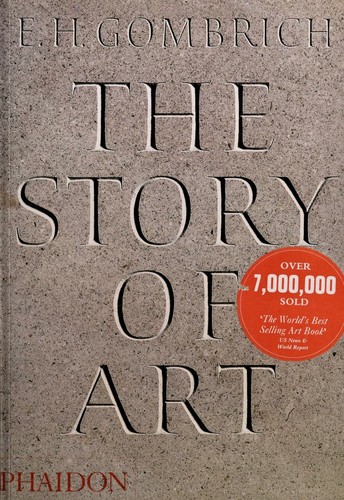
A unique oil painting is inherently more scarce than a print edition of 500. Within a single artist's body of work, certain periods, subjects, or mediums command premiums. Blue-chip collectors prize "museum quality" works -- the pieces that define an artist's contribution to art history. Understanding which works within an artist's catalogue are most sought-after requires research, and books like The Story of Art by E.H. Gombrich remain essential reading for building the contextual knowledge that lets you recognize significance.
Art markets have cycles. Certain movements, mediums, and demographics fall in and out of favor. In recent years, the market has seen surging interest in works by previously underrepresented artists, a boom in photography and digital art, and fluctuating appetite for abstract versus figurative work. While you should never chase trends blindly, awareness of market direction helps you understand pricing context.
Galleries remain the backbone of the art market. They curate, contextualize, and guarantee the works they sell. A reputable gallery stands behind authenticity and condition, handles framing and shipping, and provides documentation. For new collectors, start with galleries in your city and build outward. Gallery relationships are long-term partnerships, not transactions.
Auction Houses
Beyond Christie's and Sotheby's, mid-tier and regional auction houses like Heritage Auctions, Bonhams, and local estate auctioneers often have excellent works at accessible prices. Study the catalogue carefully, set a firm maximum bid before the auction starts, and factor in the buyer's premium (typically 20-26% on top of the hammer price). The Sotheby's buyer guide walks first-time auction buyers through the process step by step.
Art Fairs
Art fairs concentrate dozens or hundreds of galleries in a single venue, letting you compare a huge range of work in one visit. Major fairs like Art Basel, Frieze, and The Armory Show cater to high-end collectors, but satellite fairs and regional events (like the Texas Contemporary in Houston or East Austin Studio Tour here in Austin) are far more approachable and often feature emerging artists at accessible price points.
Online Platforms
Artsy, Saatchi Art, Paddle8, and dozens of specialized platforms have democratized access to the art market. These are particularly useful for research and discovery. Just be cautious: buying art without seeing it in person carries risk. Request condition reports, additional photographs in different lighting, and understand the return policy before committing.
Austin Art Insider
Free weekly guide to galleries, exhibitions & collecting in Austin.
Consignment Galleries and Estate Sales
This is where patient, knowledgeable collectors find exceptional value. When families inherit collections they did not build themselves, they often consign works to galleries or sell through estate sales at prices that prioritize a fair sale over maximum extraction. The works are real, often well-documented, and available at prices that reflect the seller's desire to find the right home rather than to set auction records.
Authentication and Provenance: Protecting Yourself
Never buy a work attributed to a well-known artist without authentication. For artists with established authentication bodies (catalogue raisonne committees, artist foundations), verification is straightforward if sometimes slow and expensive. For lesser-known artists, provenance research -- exhibition labels on the reverse, gallery stamps, inscriptions, bills of sale, and photographic records -- is your primary tool.
John Berger's Ways of Seeing fundamentally changed how people understand the relationship between art, ownership, and value. Reading it will sharpen your ability to look critically at art and the stories told about it, which is itself a form of authentication -- learning to see clearly rather than accepting narratives at face value.
For works above $5,000, consider engaging an independent art advisor or appraiser. The cost is modest relative to the protection it provides, and a good advisor's network and knowledge will save you from mistakes that no amount of online research can prevent.
$5,000,
For works above consider engaging an independent art advisor or appraiser
Insurance and Storage: The Costs No One Mentions
New collectors frequently underestimate the ongoing costs of owning art. Once you buy a piece, you are responsible for its physical safety and financial protection.
Insurance
Standard homeowner's or renter's insurance policies typically cover art only up to a low sublimit and may not cover all risks (flooding, earthquake, breakage during a move). Once your collection exceeds a few thousand dollars in value, contact your insurer about a fine arts floater or a dedicated collection policy. Companies like Chubb, AXA XL, and Berkley Asset Protection specialize in art insurance. You will need appraisals -- typically updated every three to five years -- to establish and maintain coverage.
Storage and Display
UV-filtering glass or acrylic in frames protects works on paper and photographs from light damage. Keep paintings away from exterior walls (temperature and humidity fluctuations), direct sunlight, kitchen grease, and bathroom moisture. For works in storage rather than on display, archival materials are non-negotiable -- acid-free boxes, tissue, and controlled climate conditions. For a deep dive on storage best practices, see our guide on art storage solutions to protect your investment.
Buying for decoration alone. There is nothing wrong with buying decorative art, but do not confuse it with collecting. A $200 canvas from a home goods store has no secondary market value. An original work by an emerging artist at the same price point might.
Ignoring condition. A beautiful painting with significant damage is worth a fraction of the same painting in good condition. Restoration is expensive and imperfect. Always examine carefully and, when possible, request a condition report.
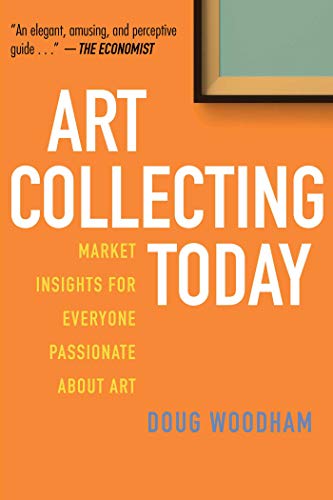
Skipping research. Impulse purchases are the most common source of collector regret. Take time to research the artist, understand market comparables, and confirm authenticity before buying. Doug Woodham's Art Collecting Today is an excellent primer on how the market actually functions -- written from interviews with nearly one hundred industry insiders.
Chasing trends. If everyone is talking about a particular artist or movement, prices have likely already risen to reflect that enthusiasm. The time to buy was before the hype. Develop your own eye and trust it.
Neglecting the total cost of ownership. Framing, insurance, storage, shipping, and eventual resale commissions all eat into your return. Budget for these from the start.
Failing to document. Keep receipts, certificates of authenticity, condition reports, provenance records, and photographs of every work you acquire. Good records protect your investment and make eventual resale dramatically easier.
Starting a Collection on a Budget: $500 to $5,000
A meaningful art collection does not require wealth. Here is how to build one intelligently at an accessible price point.
Original Prints and Editions ($100-$1,500)
Prints -- lithographs, etchings, screen prints, woodcuts, and giclees -- are the traditional entry point for new collectors, and for good reason. Many significant artists produced prints alongside their paintings and sculptures, meaning you can own an original, signed work by a recognized artist for a fraction of the cost of a unique piece. Look for limited editions (lower edition numbers generally carry slight premiums), good condition, and proper documentation of the edition size and printer.
For guidance on developing the visual literacy that lets you distinguish quality from mediocrity, see our guide on building an eye to spot quality art.
Emerging Artists ($200-$3,000)
Buying work by emerging artists is both the riskiest and potentially most rewarding approach. Most emerging artists will not achieve sustained market recognition -- that is simple statistical reality. But the ones who do can deliver returns that dwarf any stock pick. The key is to buy because you love the work first and to treat any appreciation as upside.
Visit graduate shows at university art programs, attend open studio events, and follow artist-run spaces and nonprofit galleries. These are the front lines of the emerging market and the prices are the lowest you will find for original work. For context on how to evaluate artists in the early stages of their careers, our guide to understanding art movements will help you recognize where an artist's work fits within broader historical and contemporary currents.
Estate and Secondary-Market Works ($300-$5,000)
Estate collections regularly yield well-crafted, historically interesting works by mid-career or regional artists whose market has not caught up with their quality. A skilled landscape painting from the 1960s, a powerful abstract from the 1980s, or a fine photographic print from the early 2000s can anchor a collection and provide daily pleasure while holding or increasing in value over time.
At Austin Gallery, many of our consignment pieces fall squarely in this range. Because we work with families managing inherited collections, our inventory turns over regularly and includes works across periods, styles, and mediums. If you are in the Austin area or shopping remotely, browse our current collection for estate pieces that offer genuine quality at fair prices.
Works on Paper and Photography ($100-$2,000)
Drawings, watercolors, and photographs are consistently undervalued relative to paintings and sculpture. A strong original drawing by an established mid-career artist might cost a tenth of what one of their paintings would sell for, yet it demonstrates the same hand, the same eye, and the same artistic intelligence. Photography, despite decades of institutional acceptance, still trades at discounts compared to other mediums of comparable art-historical significance.
Emerging vs. Established Artists: Balancing Your Collection
A well-constructed collection balances risk and stability. Established artists with auction records, museum holdings, and critical consensus provide the stable foundation -- their works are unlikely to lose value catastrophically and they give your collection credibility and depth. Emerging artists provide the growth potential and the excitement of discovery.
A reasonable starting allocation might be 60% established or mid-career artists and 40% emerging -- adjusting as your knowledge, confidence, and budget evolve. Sergey Skaterschikov's Skate's Art Investment Handbook offers data-driven frameworks for thinking about portfolio construction in art, borrowing concepts from financial portfolio theory and applying them to the unique dynamics of the art market.
A reasonable starting allocation might be 60% established or mid-career artists and 40% emerging -- adjusting as your knowledge, confidence, and budget evolve.
Art is classified as a collectible by the IRS, which means long-term capital gains on art sales are taxed at a maximum rate of 28% -- higher than the 20% maximum for stocks and bonds. Short-term gains (works held less than one year) are taxed as ordinary income.
Donating appreciated art to a qualified museum or nonprofit can yield a charitable deduction equal to the fair market value of the work, provided you have held it for more than one year and obtain a qualified appraisal. This is one of the most tax-efficient forms of charitable giving available, but the rules are strict and the penalties for overvaluation are severe. Work with a tax advisor experienced in art transactions.
For collectors building seriously, consider whether holding art through an LLC or trust offers advantages for estate planning, liability protection, or tax efficiency. These structures add complexity and cost, so they typically make sense only once a collection reaches six figures or more.
For more on the ethical dimensions of collecting, including cultural considerations, repatriation concerns, and responsible acquisition practices, see our guide on ethics in art collecting.
Building Your Knowledge Base
The single best investment you can make as a new collector is in your own education. Visit museums relentlessly. Attend gallery openings. Read widely. Train your eye by looking at as much art as possible, in person, across periods and mediums.
Start a reading program. Beyond the books mentioned above, our curated list of the best art books for collectors covers titles ranging from art history essentials to practical market guides. Supplement your reading with market data from Artnet's market analysis and the annual reports published by ArtTactic, which provide quantitative context for the qualitative knowledge you build through looking and reading.
And above all, trust the process. Building a collection is a long game. The collectors who do it best are the ones who stay curious, remain patient, and never stop looking.
For a focused starting plan, read our companion piece on starting a small art collection, which walks through the first five purchases step by step.
Pro Tip
Set a budget before visiting galleries or auctions. Emotional buying is the most common mistake new collectors make.
Provenance
The documented ownership history of an artwork from creation to present. Strong provenance — exhibition records, published references, notable prior owners — significantly increases value.
Share
Austin Art Insider
Free weekly guide to galleries, exhibitions & collecting in Austin.
Consignment
Have Art You Want to Sell?
Free appraisals, zero upfront fees, nationwide service from Austin, Texas.