Understanding Art Movements: A Collector's Quick Reference (Visual Guide)
A quick reference guide to major art movements. Understanding art history helps you collect more intelligently.
By Austin Gallery
This article contains affiliate links. Austin Gallery may earn a commission at no cost to you.
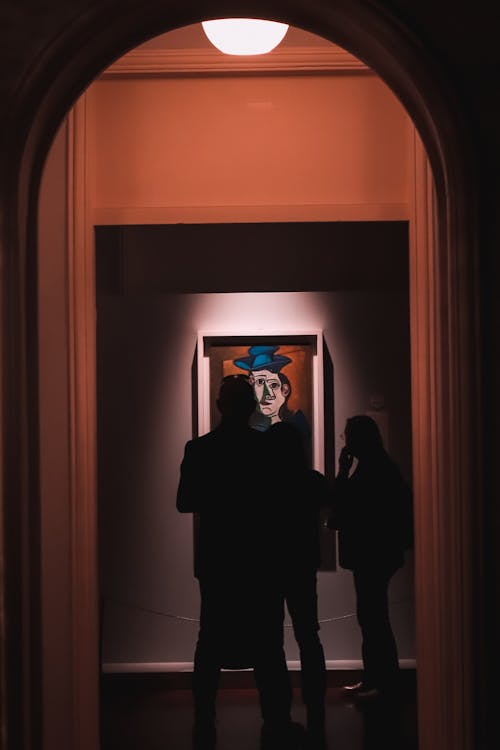
If you've ever stood in front of a painting and felt a pull -- something about the color, the brushwork, the sheer audacity of the composition -- but couldn't quite articulate why it moved you, you're not alone. Most collectors start exactly there: with instinct. And instinct is valuable. But pairing that instinct with even a basic understanding of art movements transforms you from someone who buys what looks good into someone who collects with intention, context, and -- frankly -- better financial outcomes.
Understanding art movements helps you contextualize what you see and make more informed collecting decisions
Key movements: Impressionism, Expressionism, Cubism, Abstract Expressionism, Pop Art, and Contemporary
Each movement was a reaction to what came before — art history is a continuous conversation
Art movements aren't just art history trivia. They're the framework that dealers, auction houses, appraisers, and curators use to categorize, value, and market artwork. When you understand where a piece fits in the broader arc of art history, you can spot undervalued works, avoid overpaying for derivative pieces, and build a collection that tells a coherent story. Whether you've inherited a collection and need to understand what you're holding, or you're actively building one, this guide is your quick-reference companion.
Impressionism was a radical break from everything that came before it. Instead of painting in studios with carefully blended colors and polished surfaces, the Impressionists went outside. They painted en plein air, capturing the fleeting effects of light on water, foliage, haystacks, and cathedral facades. Brushstrokes are visible and deliberate -- the paint itself becomes part of the subject. Colors are placed side by side rather than mixed on the palette, letting the viewer's eye do the blending.
Key Artists
Claude Monet, Pierre-Auguste Renoir, Edgar Degas, Camille Pissarro, Berthe Morisot, Alfred Sisley, Mary Cassatt
What to Look For as a Collector
Authentic Impressionist works from the core group are museum-level pieces now, priced well into the millions. But the movement spawned dozens of second-generation and regional Impressionists whose work is genuinely beautiful, historically significant, and far more accessible. Look for: visible brushwork capturing atmospheric effects, outdoor scenes with natural light, everyday subjects (not mythological or religious), and a sense of spontaneity. American Impressionists like Childe Hassam, William Merritt Chase, and the artists of the Old Lyme colony offer strong collecting opportunities.
Market Notes
Major Impressionist works consistently sell at the top of the auction market. Second-tier Impressionists have seen steady appreciation over the past two decades, particularly American and regional European painters. Works on paper (pastels, watercolors) by known Impressionists offer entry points below six figures.
Post-Impressionism (1880s-1910s)
What Defines It
Post-Impressionism isn't a single style -- it's a catch-all term for the artists who took what the Impressionists started and pushed it in wildly different directions. Where Impressionists captured light, Post-Impressionists wanted to capture structure, emotion, symbolism, and the inner life of the artist. This is where art gets personal, experimental, and strange in the best way.
Key Artists
Paul Cezanne, Vincent van Gogh, Paul Gauguin, Georges Seurat, Henri de Toulouse-Lautrec, Edvard Munch
What to Look For
Bold, often non-naturalistic color. Thick, expressive brushwork (especially Van Gogh's impasto). Geometric simplification of form (Cezanne's proto-Cubist landscapes). Pointillist dot patterns (Seurat). Flattened perspective and decorative patterning (Gauguin). These artists were each inventing their own visual language, so the "look" varies enormously.
Market Notes
Original works by the core Post-Impressionists are among the most expensive artworks ever sold. For collectors, the opportunity lies in prints, lithographs (Toulouse-Lautrec's posters are iconic and still appear at auction), and works by lesser-known contemporaries who exhibited alongside these masters. The Metropolitan Museum's Post-Impressionism collection provides excellent visual context for understanding the movement's range.
Art Nouveau (1890-1910)
What Defines It
Art Nouveau -- "new art" -- was the first movement to deliberately erase the line between fine art and decorative art. It shows up in architecture, furniture, jewelry, glassware, posters, and painting alike. The signature visual language: organic, flowing lines inspired by natural forms. Whiplash curves, stylized flowers, insects, and the female form rendered with sinuous elegance. Think Tiffany lamps, Mucha posters, and Gaudi's buildings.
Key Artists and Designers
Alphonse Mucha, Gustav Klimt, Rene Lalique, Louis Comfort Tiffany, Hector Guimard, Aubrey Beardsley
What to Look For
Curvilinear organic forms, asymmetrical compositions, rich decorative patterning, integration of text and image (especially in posters), and high-quality craftsmanship in materials. Art Nouveau straddles fine and decorative art, so collectors encounter it across categories -- prints, glass, ceramics, metalwork, and furniture.
Market Notes
Art Nouveau decorative objects (Tiffany glass, Lalique jewelry, Galle vases) remain highly collectible with strong, stable markets. Original Mucha lithographic posters have appreciated significantly and are a popular entry point. Klimt's paintings are museum-locked, but his prolific drawing output means works on paper appear regularly. The Victoria and Albert Museum's Art Nouveau guide offers an excellent visual primer on the movement's breadth.
Expressionism (1905-1930s)
What Defines It
If Impressionism was about how light looks, Expressionism is about how the world feels. Expressionist artists distort color, form, and perspective to convey emotional and psychological states. The world in an Expressionist painting is filtered through anxiety, ecstasy, alienation, or rage. Colors are often jarring and unnatural. Faces are masks. Landscapes twist and writhe.
Key Artists
Ernst Ludwig Kirchner, Wassily Kandinsky, Egon Schiele, Emil Nolde, Franz Marc, Edvard Munch (who bridges Post-Impressionism and Expressionism), Kathe Kollwitz
What to Look For
Aggressive, sometimes crude brushwork. High-contrast, non-naturalistic color (blue horses, green faces, red skies). Distorted figures and perspectives. Emotional intensity that borders on confrontational. German Expressionist woodcuts and prints are particularly distinctive -- the stark black-and-white contrasts and jagged lines are immediately recognizable.
Market Notes
German Expressionist prints represent one of the strongest and most liquid markets in modern art collecting. Original prints by Kirchner, Nolde, and Kollwitz appear regularly at auction and range from a few thousand to six figures depending on rarity and condition. This is a movement where prints are not secondary works -- the woodcut and lithograph are the medium. For deep background on Expressionism's origins and evolution, Khan Academy's Expressionism module is thorough and free.
Cubism (1907-1920s)
What Defines It
Cubism shattered the single-viewpoint perspective that had dominated Western art since the Renaissance. Instead of showing what a subject looks like from one angle, Cubist painters show it from multiple angles simultaneously, fracturing the subject into geometric planes and reassembling it on the canvas. Analytic Cubism (1907-1912) breaks forms into monochromatic faceted planes. Synthetic Cubism (1912-1920s) introduces collage elements, brighter colors, and flatter, more decorative compositions.
Key Artists
Pablo Picasso, Georges Braque, Juan Gris, Fernand Leger, Robert Delaunay
What to Look For
Fragmented, geometric forms. Multiple viewpoints of the same subject presented simultaneously. Muted earth tones (Analytic phase) or bold colors with collage elements (Synthetic phase). Flattened picture plane with no traditional depth. Text fragments, newspaper clippings, or faux wood grain incorporated into the image.
Market Notes
Major Cubist works by Picasso and Braque are among the most valuable artworks in existence. For collectors, Cubism's enormous influence means there are hundreds of artists working in Cubist-influenced styles whose work is accessible at a range of price points. Prints and ceramics by Picasso appear regularly at auction. Juan Gris remains comparatively undervalued relative to Picasso and Braque.
Surrealism drew on Freudian psychoanalysis and the Dada movement's nihilism to create art that accesses the unconscious mind. There are two main strands: the meticulous, photorealistic rendering of impossible dreamscapes (Dali, Magritte) and the automatic, improvised mark-making that tries to bypass conscious thought entirely (Miro, Masson). Both are concerned with what lies beneath rational experience.
Austin Art Insider
Free weekly guide to galleries, exhibitions & collecting in Austin.
Key Artists
Salvador Dali, Rene Magritte, Joan Miro, Max Ernst, Frida Kahlo, Leonora Carrington, Dorothea Tanning, Remedios Varo
What to Look For
Dreamlike or hallucinatory imagery. Unexpected juxtapositions of unrelated objects. Hyper-detailed rendering of impossible scenes. Biomorphic (organic but unidentifiable) forms. Automatist techniques like frottage, decalcomania, and drip methods. A sense of unease, humor, or wonder.
Market Notes
The Surrealist market is broad and active. Dali's prolific print output means signed lithographs and etchings appear frequently, but beware: Dali forgeries and unauthorized reproductions are rampant. Authentication is critical. Female Surrealists -- particularly Carrington, Tanning, and Varo -- have seen dramatic market revaluation in recent years, with prices multiplying five to ten times over the past decade. The Tate's Surrealism glossary entry provides excellent context and key examples.
Abstract Expressionism was the first major American art movement and it shifted the center of the art world from Paris to New York. Two main approaches: Action Painting (Pollock, de Kooning), where the physical act of painting -- dripping, splashing, gestural brushwork -- is the subject; and Color Field Painting (Rothko, Newman, Frankenthaler), where large expanses of color create immersive, meditative experiences. Both reject representation entirely in favor of pure visual and emotional impact.
Key Artists
Jackson Pollock, Willem de Kooning, Mark Rothko, Franz Kline, Helen Frankenthaler, Lee Krasner, Robert Motherwell, Barnett Newman, Clyfford Still
What to Look For
Large-scale canvases (this movement favored monumental sizes). No recognizable subject matter. Evidence of physical process -- drips, splashes, broad gestural marks, or stained canvas. Emotional intensity conveyed through color, scale, and texture alone. Works on paper and smaller studies by these artists offer more accessible price points while still capturing the movement's energy.
Market Notes
Major Abstract Expressionist canvases regularly trade above $50 million. But the movement's legacy extends to dozens of significant artists beyond the "big names." Second-generation AbEx painters like Joan Mitchell, Grace Hartigan, and Sam Francis offer exceptional quality at comparatively accessible prices (though Mitchell's market has surged dramatically in recent years). The MoMA's Abstract Expressionism collection page is essential viewing for understanding the movement's visual range.
$50 million
Major Abstract Expressionist canvases regularly trade above
Pop Art took the imagery of mass culture -- advertisements, comic strips, consumer products, celebrity photographs -- and reframed it as fine art. It was deliberately provocative: if Abstract Expressionism was earnest and heroic, Pop Art was ironic, cool, and democratic. The techniques borrowed from commercial printing: screen printing, Ben-Day dots, flat color fields, and mechanical reproduction.
Key Artists
Andy Warhol, Roy Lichtenstein, Jasper Johns, Robert Rauschenberg, Claes Oldenburg, James Rosenquist, Ed Ruscha, Tom Wesselmann
What to Look For
Appropriated commercial or popular culture imagery. Bright, flat, graphic colors. Screen-printing and photographic transfer techniques. Repetition and seriality. Ironic or deadpan presentation of familiar objects. Hard edges and clean surfaces that mimic commercial printing.
Market Notes
Warhol is the dominant force in the Pop Art market, with his screen prints forming one of the most actively traded categories in the entire art market. Lichtenstein prints are similarly liquid and well-documented. Pop Art's accessibility and visual punch make it perennially popular with new collectors. Smaller works and prints by the core Pop artists regularly appear at auction, with Warhol prints ranging from a few thousand to several hundred thousand dollars depending on edition, subject, and condition.
Minimalism (1960s-1970s)
What Defines It
Minimalism stripped art down to its most fundamental elements: geometric forms, industrial materials, repetition, and the literal presence of the object in space. Where Abstract Expressionism was all about the artist's emotional gesture, Minimalism removed the artist's hand entirely. These works are fabricated, not "made." They are what they are -- steel cubes, fluorescent light fixtures, stacked bricks -- and nothing more.
Key Artists
Donald Judd, Dan Flavin, Carl Andre, Sol LeWitt, Agnes Martin, Frank Stella (early work), Robert Morris
What to Look For
Geometric precision. Industrial or commercial materials (steel, plexiglass, fluorescent tubes, bricks). Serial repetition. No evidence of the artist's hand or brushwork. The object's relationship to the surrounding space is integral -- Minimalist work is often site-specific or installation-based. Agnes Martin is a notable exception within the group, using handmade grids and delicate pencil lines to create meditative, luminous surfaces.
Market Notes
Minimalist works by Judd, Flavin, and Stella command strong prices at auction. Sol LeWitt's wall drawings and prints offer a fascinating collecting opportunity -- the "work" is actually a set of instructions that can be executed by anyone, making the certificate of authenticity the collectible object. Agnes Martin's paintings have appreciated dramatically, with major works now exceeding $10 million.
Contemporary Art (1970s-Present)
What Defines It
"Contemporary" is the broadest and most contested category on this list. It essentially means art being made now, or within living memory, by artists responding to the current moment. There's no single style or medium. Contemporary art encompasses painting, sculpture, installation, video, performance, digital media, and forms that haven't been named yet. What unites it is a self-awareness about art's role in culture, a willingness to use any medium or strategy, and an engagement with identity, technology, globalization, and the art market itself.
Key Artists (a necessarily incomplete list)
Jean-Michel Basquiat, Gerhard Richter, Jeff Koons, Damien Hirst, Ai Weiwei, Kara Walker, Kehinde Wiley, Julie Mehretu, Yayoi Kusama, Banksy, Mark Bradford
What to Look For
Contemporary art resists easy visual categorization, which is exactly the point. Instead of looking for stylistic markers, focus on: provenance and exhibition history, gallery representation, critical reception, and the artist's trajectory. For emerging and mid-career artists, look for institutional support (museum shows, biennale participation, major collection acquisitions) as indicators of long-term significance.
Market Notes
The contemporary art market is the most volatile and speculative segment of the art world. Blue-chip contemporary artists (Richter, Basquiat, Kusama) trade at auction for tens of millions, while emerging artists can see prices spike and crash within a few years. Collectors who do well in contemporary art tend to buy from a thesis -- they develop a point of view about what matters and build their collection around it, rather than chasing trends. The MoMA Learning resources provide outstanding free education on contemporary art's major themes and practitioners.
How Understanding Movements Makes You a Smarter Collector
Knowing art movements isn't academic exercise -- it's practical intelligence that directly affects your collecting decisions. Here's how:
You can spot attribution clues. When you encounter an unsigned or ambiguously attributed work, understanding the visual vocabulary of movements helps you narrow the possibilities. A painting with visible brushwork, atmospheric light effects, and everyday outdoor subjects from the 1880s points toward Impressionism. That's your starting point for research and authentication.
You understand market context. Art doesn't exist in a vacuum. A second-generation Abstract Expressionist painting from the 1950s occupies a specific market niche with established price ranges, known collectors, and predictable auction performance. Knowing the movement tells you where to look for comparables and what "fair value" looks like.
You can identify undervalued areas. Markets shift. Female Surrealists were dramatically undervalued for decades before the market corrected in the 2010s and 2020s. Collectors who understood the movement's history could see that artists like Leonora Carrington and Remedios Varo were producing work equal in quality to their more famous male contemporaries -- and could acquire it for a fraction of the price.
You avoid costly mistakes. Understanding that Dali's authorized print editions are well-documented helps you avoid the flood of unauthorized reproductions. Knowing that a "Minimalist" sculpture should show no evidence of the artist's hand helps you distinguish authentic work from imitations. Knowledge is your best defense against forgery and misattribution.
For a deeper dive into the books that will build your art historical foundation, see our guide to the best art books for collectors.
Essential Reading for Collectors
Building a working knowledge of art movements doesn't require an art history degree. These books will give you the foundation you need to collect with confidence:
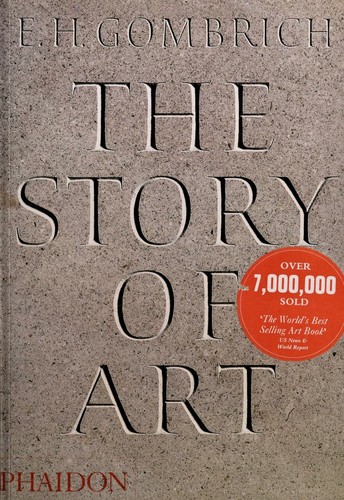
The Story of Art by E.H. Gombrich -- The single best introduction to Western art history ever written. Clear, engaging, and comprehensive from ancient Egypt to the modern era. If you read only one book on this list, make it this one.
Ways of Seeing by John Berger -- A slim, provocative book that changes how you look at art. Berger examines how reproduction, ownership, and context shape our perception of images. Essential reading for anyone who buys and sells art.
The Shock of the New by Robert Hughes -- The definitive survey of modern art from Impressionism through the late twentieth century. Hughes writes with wit, authority, and genuine passion. His chapters on Cubism and Abstract Expressionism are particularly outstanding.
50 Art Movements You Should Know by Rosalind Ormiston -- A visually rich, concise reference that covers each movement with key dates, representative works, and clear definitions. Perfect for quick reference when you encounter an unfamiliar style.
The Art Book by DK -- Organized alphabetically by artist rather than chronologically, this accessible volume covers 600+ artists with full-page reproductions. An excellent companion for identifying specific artists within movements.
A Final Note on Collecting with Context
The art market rewards knowledge. Every collector we work with at Austin Gallery who takes the time to understand art movements makes better buying decisions, sets more realistic expectations when consigning, and ultimately builds more meaningful collections. You don't need to become a scholar. You need to develop a framework -- a mental map of how the art you encounter fits into the larger story.
Start with the movements you're naturally drawn to. Read one book. Visit one museum collection page. Look at enough examples that you can recognize the visual hallmarks without thinking about it. That foundation will serve you every time you stand in front of a painting and feel that pull -- and now you'll know exactly why.
That foundation will serve you every time you stand in front of a painting and feel that pull -- and now you'll know exactly why.
Share
Austin Art Insider
Free weekly guide to galleries, exhibitions & collecting in Austin.
Consignment
Have Art You Want to Sell?
Free appraisals, zero upfront fees, nationwide service from Austin, Texas.