HEB controls nearly half the Austin grocery market. This sourced editorial examines the evidence: copycat products, zip-code pricing, $5.12/hr Favor wages, and what our city deserves instead.
By Austin Gallery
This article contains affiliate links. Austin Gallery may earn a commission at no cost to you.
We live in Austin. We shop at HEB probably three times a week, like every other family in this city. And we're tired of pretending that HEB is doing right by us.
This isn't a boycott call. We still shop there — most of us have no choice, and that's the whole problem. This is a demand that HEB do better. Because when you look at what's actually happening behind the friendly branding and the heartwarming commercials, the picture is ugly: a company that copies the products of the small makers it claims to champion, charges different prices depending on your zip code, fights to keep injured workers out of the courts, and has built a market dominance so total that competitors publicly refuse to even enter Texas.
HEB isn't your neighbor. HEB is a $40-billion-a-year corporation. And it's time we started holding it to account like one.
We welcome HEB's response to any of the points raised in this editorial and will publish it in full.
Key Takeaways
HEB controls 46% of the Austin grocery market — nearly half of every dollar you spend on food goes to one company
KENS 5 found HEB charges different prices at different stores — working-class neighborhoods pay more for the same organic spinach
The FTC reports slotting fees of $75-$300 per item per store — your favorite Austin salsa maker literally can't afford to be on the shelf
Human Rights Watch found Favor (owned by HEB) delivery runners earn $5.12/hr after expenses — the person bringing your groceries can't afford groceries
HEB has opted out of Texas workers' compensation since 1994 — if an HEB employee gets hurt, HEB decides whether to pay
Grocery Dive called HEB's Quest for Texas Best "an investment in private label" — 135 contest products absorbed into HEB's own brands
46%HEB's Austin grocery market share — Walmart has just 19%
$5.12/hrWhat Favor runners earn after expenses (HRW 2025)
$75-$300Slotting fee per item, per store, to get on HEB shelves
135Small brand products absorbed into HEB private label
Editorial Disclosure
This is an editorial — our opinion, informed by publicly available sources. Every factual claim is sourced from published news reports, court filings, government agency reports, or public records. This is protected speech under the First Amendment and the Texas Citizens Participation Act.
The Store Brand Playbook
Here's how it works. A small Texas food maker — a salsa company, a tortilla maker, a craft cookie brand — gets their product onto HEB shelves. They celebrate. They've made it. Then something happens.
HEB has access to their sales data. Their pricing. Their ingredient lists. Their customer demographics. All the information a small brand hands over as part of the business relationship. And then, quietly, an HEB store-brand clone appears on the shelf. Hill Country Fare. HEB Select Ingredients. HEB Organics. Same product category, similar packaging, lower price. The original brand gets pushed to the bottom shelf — or off the shelf entirely. This is, in our view, the predictable outcome of the private label model.
What this means for you in Austin: That salsa you loved? The one from the family in Pflugerville who spent three years perfecting the recipe? It might still be on the shelf — but now it's on the bottom, behind an HEB clone, at a price the family can't match because HEB controls the supply chain. You'll probably grab the HEB version because it's eye-level and cheaper. The family goes under. Austin loses another small business. And HEB adds another product to its private label empire.
This isn't a conspiracy theory. It's the private label playbook, and it's an industry-wide problem that the Federal Trade Commission has been studying for decades.
The FTC's report on slotting allowances found that grocery chains charge $75 to $300 per item, per store just for shelf placement. One speaker at the FTC workshop estimated that launching a small product line of four items nationally would cost approximately $16.8 million in slotting fees alone. The Center for Science in the Public Interest's investigative report "Rigged: Supermarket Shelves for Sale" documented how one small ice cream company paid $30,000 to get into some stores of one chain, $50,000 for another, and faced nearly half a million dollars for a third.
For a small Austin food maker, these numbers are extinction-level. That's your neighbor's hot sauce company. That's the woman at the Mueller farmers market who makes the best tamales you've ever had. She can't afford $300 per store times 400 Texas HEB locations to get on the shelf — and even if she could, HEB might just clone her product after studying her sales data.
Quest for Texas Best — Or Quest for Texas Best Ideas?
HEB runs an annual competition called Quest for Texas Best, where small Texas food companies submit their products for a chance to win shelf space and $100,000 in prizes. It sounds generous. It sounds like HEB championing the little guy.
Grocery Dive called it what it is: "an investment in private label." Since the competition began in 2014, HEB has incorporated 135 products from the contest into its own private label lineup. Small brands submit their recipes, their innovations, their life's work — and HEB gets a curated pipeline of products to study, adapt, and eventually absorb.
In 2025, Austin's own Oca Foods won the grand prize — $50,000 for their peanut butter bites. A great moment for a small Austin brand. But ask yourself: if the pattern we've documented holds, will Oca Foods still be on the shelf in five years, or will there be an "HEB Select Ingredients Peanut Butter Bites" sitting at eye level while Oca gets pushed to the bottom?
It's Happening Everywhere — And Brands Are Fighting Back
This isn't just an HEB problem. It's an industry problem, and the lawsuits are piling up:
J.M. Smucker sued Trader Joe's in October 2025 over copycat Uncrustables sandwiches, alleging trademark infringement and unfair competition (Food Dive)
Mondelez International sued Aldi for replicating the packaging of Oreos, Chips Ahoy!, and five other brands (Grocery Dive)
Salon reported on the "very, very guarded" agreements that dictate what gets sold in grocery stores — and who profits
In our view, HEB's private label strategy isn't innovation — it's extraction. Small makers do the hard work of developing products that Austin families love, and HEB uses its market power to absorb that innovation into its own brands. The small maker gets a prize. HEB gets a product line.
The Shelf Test
Next time you're at HEB, try this: pick any category — salsa, tortilla chips, coffee — and look at where the local products are shelved versus the HEB store brands. The HEB brands are at eye level. The local makers are on the bottom shelf or crammed at the end. Now check the ingredient lists. The local product usually has fewer, better ingredients. The HEB clone has more fillers. You're paying less for the clone, but you're getting less too — and the Austin family that made the original is losing their livelihood.
Skip the Clone — Buy Direct
Many Austin food makers sell direct. Yellowbird Foods (hot sauce, East Austin), Siete Family Foods (tortillas, chips — born in Austin), and Tati'o Snacks all sell online. When you buy direct, 100% of your money goes to the maker — not to HEB's shelf-space fees.
Different Zip Code, Different Price
In 2019, KENS 5 visited four HEB locations across the San Antonio area and compared the prices of 10 common grocery items — milk, eggs, vegetables, the things every family buys every week.
What they found should make you angry.
HEB's organic spinach cost $4.96 on the south side of San Antonio — a working-class neighborhood. At the Schertz and Babcock Road locations, it was more than a dollar cheaper. According to U.S. Census data, the shoppers on the south side earn $36,000 less per year than those in Schertz. The people who can least afford to pay more are paying more for the same product at the same chain.
What this means for you in Austin: Think about the HEB on Rundberg versus the HEB on West Lake Hills or Bee Cave. Think about the HEB on East Riverside versus the new lakefront HEB on South Pleasant Valley. Austin is one of the most economically segregated cities in America. If HEB is varying prices by location — even on just 1.5% of products — that surcharge falls hardest on the families in Dove Springs, Rundberg, and East Riverside who are already drowning in Austin's cost-of-living crisis.
HEB's response? They told KENS 5 that "98.5% of items are priced consistently" across stores. If HEB carries roughly 100,000 products, 1.5% means 1,500 items priced differently depending on where you live. That's not a rounding error. That's a policy.
This isn't just a San Antonio problem. On City-Data forums, San Antonio residents have reported price differences of 30% or more between HEB's Alon Market (an upscale location) and Hardy Oak. On Threads and Reddit, Austin shoppers regularly compare receipts and find the same pattern.
Austin median home price: over $500,000. Average childcare: $1,200/month. And the one thing every family needs — groceries — costs more if you live on the wrong side of I-35.
In our view, location-based pricing at a company with 46% market share isn't a business strategy. It's a tax on being poor in Austin.
Price-Check Hack
HEB's app shows prices by store. Before your next trip, check the same item at your local HEB versus one in a wealthier neighborhood. Screenshot it. If you find a difference, post it. Transparency is the first step toward accountability. Tag us @austingallery — we'll compile and publish what we find.
If HEB carries 100,000 products and 1.5% are priced differently by location, that's 1,500 items where your zip code determines what you pay.
What's Actually in Your Cart
Walk the aisles of any HEB. Really look at what's getting the prime shelf real estate — the eye-level spots, the endcaps, the checkout displays. It's overwhelmingly processed food. Store-brand chips. Sugary cereals. Frozen dinners packed with sodium. The fresh, local, clean options exist, but you have to hunt for them.
And when you do find the HEB-branded products, you might want to check the recent recall history:
October 2024: HEB chicken casseroles recalled as part of a nearly 12-million-pound Listeria contamination affecting BrucePac products sold at HEB, Aldi, Trader Joe's, and Walmart (this recall was industry-wide, not HEB-specific — but it illustrates the risks of relying on anonymous co-packers)
Ongoing: HEB's recall page lists a steady stream of product safety issues across their store-brand lines
What this means for your family: When HEB rushes to clone a product and push it out under Hill Country Fare at the lowest possible price, something has to give. Quality control. Ingredient sourcing. Third-party co-packers cutting corners. Your kids eat what's on the shelf, and what's on the shelf is increasingly store-brand product made by anonymous co-packers whose names you'll never see on the label.
Check Your Labels
HEB's store brands — Hill Country Fare, HEB Select Ingredients, HEB Organics — are manufactured by third-party co-packers. We encourage you to compare the ingredient list of an HEB store brand versus the local maker's original. In our experience, the local product typically has fewer, simpler ingredients, while the store brand tends to have significantly more. We encourage you to compare labels yourself and decide what you're comfortable feeding your family.
Austin Alternatives: Clean Food That's Actually Local
These Austin businesses make real food with real ingredients — and you can buy from them without going through HEB:
Johnson's Backyard Garden CSA — 186-acre certified organic farm on the Colorado River, delivers weekly produce boxes to 900+ Austin families ($22-$41/week)
El Milagro Tortillas — Austin's legendary tortilleria since 1950, 905 E 7th St. Fresh corn and flour tortillas made daily with traditional methods
Wheatsville Co-op — Austin's only food co-op since 1976, two locations (Guadalupe & South Lamar), 21,000+ member-owners, local-first sourcing
HEB runs some of the most heartwarming commercials in Texas. The H-E-B Spirit of Giving. Disaster relief during hurricanes. Employees smiling at checkout. It's brilliant marketing. And it obscures a labor record that deserves scrutiny.
What this means for the person bagging your groceries: If an HEB employee slips on a wet floor, strains their back lifting product, or gets injured by equipment — they don't file a standard workers' comp claim. They go through HEB's company-controlled claims process. HEB decides whether the injury qualifies. HEB decides how much they're owed. HEB controls the entire process — though injured employees retain the right to sue for negligence, as non-subscribers lose certain legal protections. And how many hourly grocery workers earning $14-16/hour can afford a lawyer to fight back?
As multiple Texas workplace injury attorneys have noted, injured HEB employees can sue the company for negligence — non-subscribers lose certain legal protections — but the power imbalance is enormous.
Austin Art Insider
Free weekly guide to galleries, exhibitions & collecting in Austin.
The Fruit Cutter Class Action
In April 2013, more than 80 immigrant women who cut, bagged, and stocked fruit in HEB stores filed a class action lawsuit alleging they were paid approximately $4 per hour for 50-70 hour weeks with no overtime. HEB claimed these weren't their employees — they worked for Pastrana's Produce, a Brownsville-based company. But the workers pointed out that they worked exclusively in HEB stores, under the supervision of HEB produce managers, who controlled their hours and even dictated how to cut the fruit.
The Equal Justice Center represented the workers and alleged that when the women raised concerns, HEB and Pastrana's terminated them and tried to mislead them into waiving their legal claims.
That happened here. Those women cut fruit in Austin HEB stores. The fruit in the plastic containers you grab on your way to checkout — it was cut by women who, according to the lawsuit, were earning $4 an hour. Think about that next time you see the "H-E-B Spirit" commercial.
Favor: $5.12 an Hour
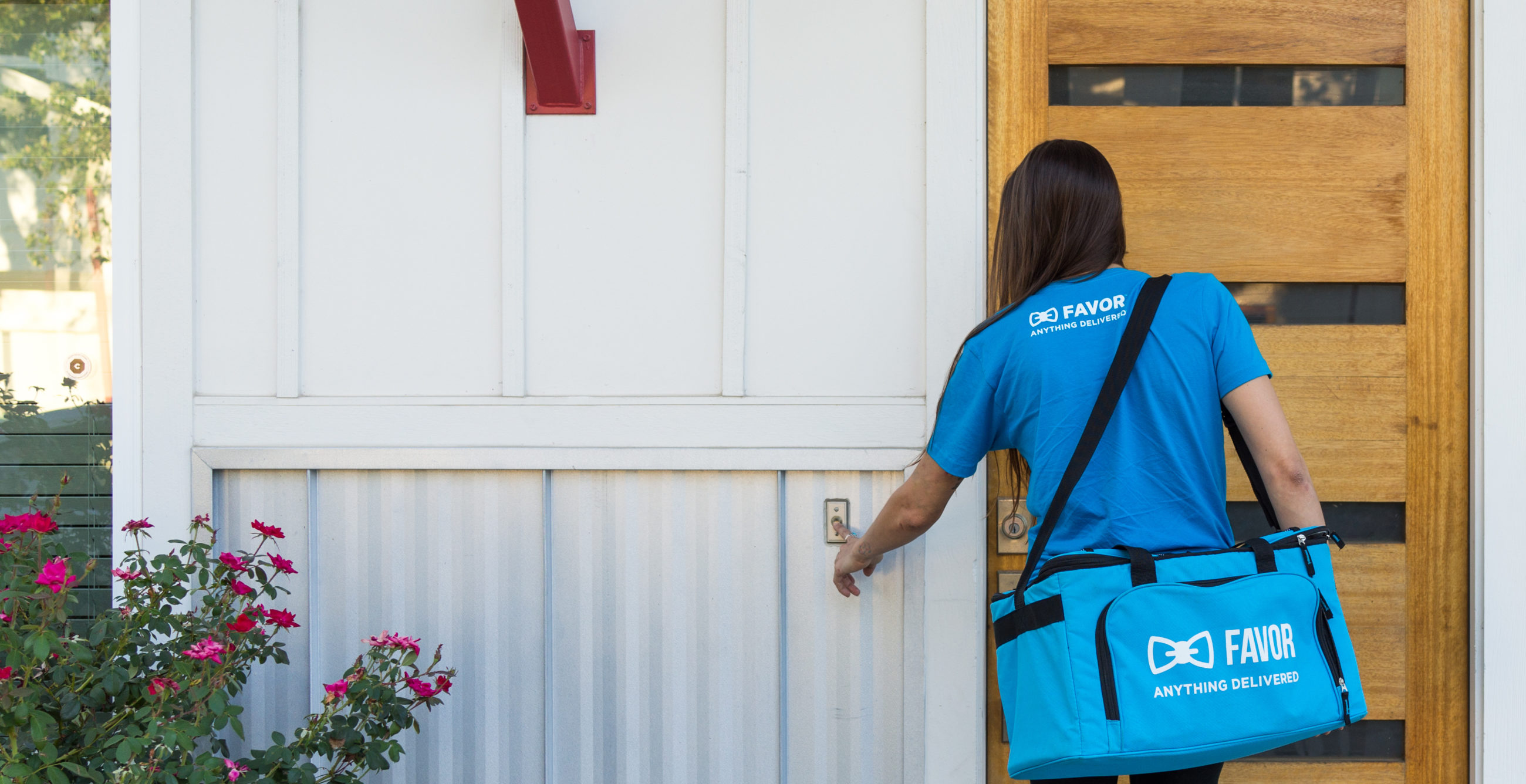
In 2018, HEB acquired Favor, an Austin-based delivery app. In May 2025, Human Rights Watch published "The Gig Trap", a 155-page investigation into gig worker exploitation at seven major U.S. platforms — including Favor.
The findings are damning. Platform workers surveyed in Texas earn $5.12 an hour after expenses — approximately 70% below a living wage as estimated by MIT, and nearly 30% below the federal minimum wage. Workers receive no health insurance, no paid leave, no unemployment protections. Many are laid off without notice, explanation, or recourse.
What this means for Austin: Those Favor runners are your neighbors. They're driving through Austin traffic in their own cars, paying for their own gas, with no health insurance, delivering HEB groceries to people who can afford the delivery fee — while the runners themselves can't afford to shop at HEB. HEB's annual revenue is estimated at over $40 billion. There is no excuse for paying delivery workers less than minimum wage.
$5.12/hr — what HEB-owned Favor delivery runners earn after expenses, per Human Rights Watch (2025)
Skip Favor — Support Local Delivery
Johnson's Backyard Garden delivers organic produce boxes to your door for $27/week (home delivery). Farmhouse Delivery sources from 100+ Texas farms and delivers weekly. The Refugee Collective CSA is a USDA Certified Organic farm run by refugee families — their CSA delivers across Austin. All three pay their workers fairly and source transparently.
The people delivering HEB groceries to your door through Favor can't afford to buy groceries at HEB.
The Monopoly We're Not Talking About
Let's talk about what HEB's market dominance actually means for your daily life in Austin.
HEB controls over 35% of the Texas grocery market — a higher share than Walmart, the largest company on Earth. But in Austin, it's much worse:
46% in Austin. That means for nearly half of every grocery dollar spent in this city, there is no competitive pressure. No alternative bidding down prices. No rival forcing better wages. No other chain offering shelf space to the local salsa maker HEB just cloned.
When Hy-Vee, a large Midwestern grocery chain, considered expanding into the southern U.S. in 2021, CEO Randy Edeker explicitly said they would not enter Texas. His exact words, reported by KSAT: "There are lots of weak competitors out there that we just don't need to go poke that bear."
When your competitors publicly refuse to enter your market, that's not competition. That's a monopoly in everything but legal designation.
The Baylor Lariat editorial board put it bluntly: "Not everything needs to be bigger in Texas: End H-E-B monopoly." The student editors described how HEB had driven every competitor out of Waco, leaving college students and families with no real alternative.
And the federal government is paying attention. The FTC's March 2024 report on grocery supply chains found that large grocery chains "used rising costs as an opportunity to further hike prices to increase their profits" — with food retailer revenue reaching 7% over total costs in 2023, the highest margin in years.
In plain English: the big grocers — and HEB is the biggest in Texas — have been padding their margins while blaming inflation. And in Austin, where HEB has 46% market share, you have almost nowhere else to go.
We're not asking HEB to stop existing. We're asking them to stop pretending they're our friend while picking our pockets and crushing our neighbors.
Austin has one of the best local food economies in the country — if you know where to look. The problem is that HEB's dominance makes it invisible. Here's what's actually out there:
Grocery Alternatives
Wheatsville Food Co-op
What: Austin's only food cooperative, member-owned since 1976. 21,000+ member-owners. Local-first sourcing, fair trade, organic focus.
Why it matters: When you shop at Wheatsville, profits stay in Austin and go back to member-owners. No corporate headquarters in San Antonio taking a cut.
Dedicated local-maker sections. Not one sad endcap during Texas Independence Day. Real, permanent shelf sections in every store — at eye level — featuring products from Texas food makers. With fair slotting terms that don't bankrupt the maker.
Transparent pricing. Publish the price of every product at every store. Let customers see whether their neighborhood is being charged more. If 98.5% of prices are truly consistent, prove it.
Stop cloning local products. If a small Texas brand wins your contest and gets on your shelves, don't turn around and release a store-brand version of the same product. Set a policy. Publish it. Hold yourself to it.
Pay your delivery workers. Human Rights Watch documented that Favor runners earn $5.12 an hour. HEB's annual revenue is over $40 billion. There is no excuse.
Invest in local food infrastructure. Partner with Austin's farmers markets, community gardens, and food co-ops. Help build the local food economy instead of consuming it.
What You Can Do
We're not naive. We know most of us are going to keep shopping at HEB — we will too. They're convenient, they're everywhere, and in many Austin neighborhoods, they're the only option. That's the whole problem.
But you have more power than you think:
Shift 20% of your grocery spending to local. You don't have to quit HEB cold turkey. Just commit to buying one thing each week from a farmers market, a local bakery, or a CSA box. If every Austin family shifted 20% of their grocery budget to local sources, that's hundreds of millions of dollars flowing back into Austin's food economy instead of HEB's corporate accounts.
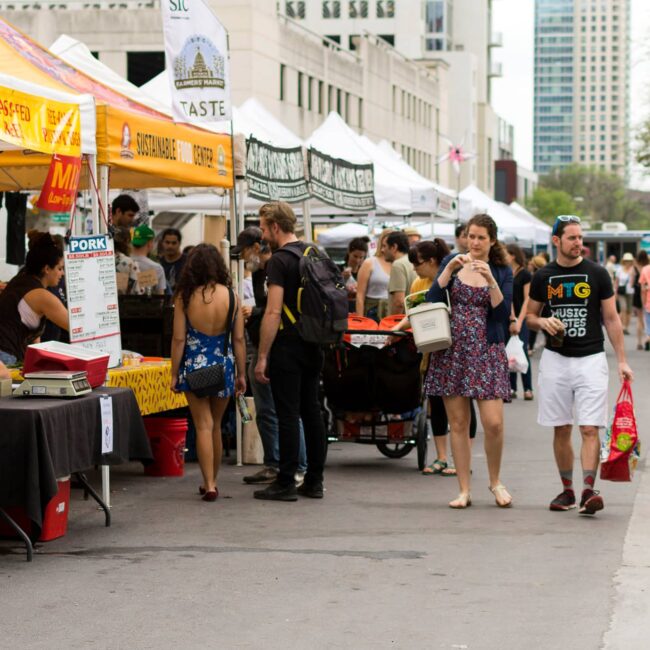
Hit the farmers market this Saturday.SFC Downtown is at Republic Square, 9am-1pm, every Saturday, rain or shine. Free parking at the State Garage N on San Antonio St. Bring the kids. Bring cash. Bring a reusable bag. You'll spend less than you think and eat better than you have in months.
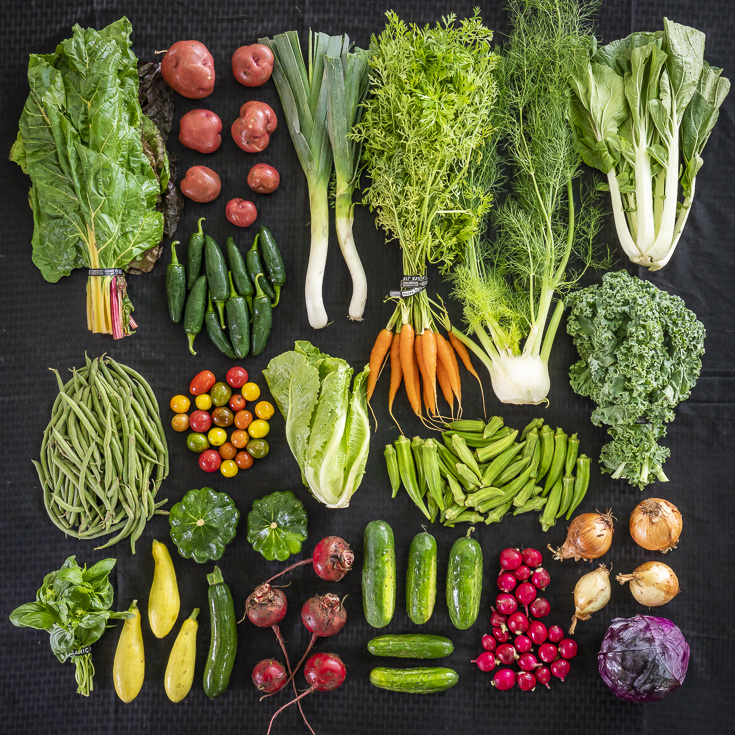
Join a CSA.Johnson's Backyard Garden starts at $22/week for a box of certified organic produce from a farm five miles east of downtown. That's less than most families spend on a single HEB trip's worth of produce — and it's fresher, cleaner, and supports a local family.
Read labels. Know what you're feeding your family. Compare the ingredient list on an HEB store brand versus the small maker's original. Make informed choices.
Demand transparency. Ask HEB why prices differ by zip code. Write to your Austin City Council member. Ask whether a company with 46% of the Austin grocery market should be exempt from workers' compensation.
Support the small brands on the bottom shelf. They're the ones HEB hasn't cloned yet. When you see a local maker's product next to an HEB store-brand knockoff, reach for the local one. It costs a little more because the person who made it isn't a $40-billion corporation — they're your neighbor.
Share this post. If you're an Austin parent who's tired of this, share it. If you're a small food maker who's been squeezed out by a store-brand clone, email us — we want to hear your story. And if you work at HEB and you have stories to tell, our inbox is open.
Your Saturday Morning Alternative
Here's a real plan: This Saturday, skip HEB for your produce. Go to the SFC Farmers' Market at Republic Square (9am-1pm, free parking). Buy your fruits, vegetables, eggs, and bread directly from the people who grew and made them. Stop at El Milagro on 7th Street for tortillas on the way home. You'll spend about the same, your food will be fresher, and your money stays in Austin. Try it once. You won't go back.
The only thing protecting HEB from accountability is the myth that they're different from every other corporation. They're not. They're just better at marketing.
Austin deserves better. Our food makers deserve better. Our neighborhoods deserve equal prices. Our workers deserve a living wage. And our kids deserve to grow up in a city where the local food economy isn't controlled by a single company.
This letter represents the views of the editor and does not constitute legal advice. All factual claims are sourced from published news reports, court filings, government agency reports, and public records. For more on Austin's culture and community, see our guide to the history of art in Austin, our Austin homeschool guide, and our Austin wellness and spa guide.
The Austin Local Business Directory
The best way to support Austin is to buy from Austin. Every company listed below is locally owned, independently operated, and sells directly to you — no middleman, no slotting fees, no corporate headquarters in another city taking a cut. Bookmark this page. When you need coffee, tortillas, soap, a birthday gift, or a bottle of whiskey, start here.
Want your Austin business listed? Email t@austingallery.org with your company name, website, and what you sell. This directory is free and always will be.
Small-batch specialty coffee. Every bag sold supports Austin Pets Alive!, Autism Society of Central TX, and Central Texas Food Bank. Woman-owned, based in Dripping Springs.
You don't have to quit HEB. Just shift some of your spending. Buy your coffee from an Austin roaster. Get tortillas from El Milagro instead of Hill Country Fare. Join a CSA for your produce. Pick up a gift from a local maker instead of Amazon. Every dollar you redirect to these companies stays in Austin, supports your neighbors, and builds the local economy that HEB's dominance is quietly eroding.
This directory is maintained by Austin Gallery as a free community resource. We have no business relationship with any company listed here — this is not an advertisement. If you run an Austin business and want to be included, email t@austingallery.org. If a listing is inaccurate, let us know and we'll fix it.
Frequently Asked Questions
Is HEB a monopoly?
Legally, HEB hasn't been formally designated a monopoly by the FTC or DOJ. In practice, HEB controls 46% of the Austin grocery market and over 35% statewide — more than Walmart. When Hy-Vee's CEO publicly says he won't enter Texas because of HEB's dominance, and the Baylor Lariat editorial board calls for ending HEB's monopoly, the practical impact on Austin families looks a lot like one.
Does HEB charge different prices at different stores?
Yes. KENS 5 investigated and found price differences across San Antonio-area HEB stores, including organic spinach costing $4.96 on the south side while being more than a dollar cheaper at other locations. HEB told KENS 5 that 98.5% of items are priced consistently — which means 1.5% are not, and the higher prices tend to be in lower-income neighborhoods.
Is it legal for HEB to copy products?
Generally, yes — private label products are legal as long as they don't infringe on trademarks or patents. However, the practice is increasingly being challenged in court. J.M. Smucker sued Trader Joe's in 2025 over copycat Uncrustables, and Mondelez sued Aldi over packaging that replicated Oreos and Chips Ahoy!.
What are slotting fees?
Slotting fees are payments that food manufacturers must make to grocery chains in exchange for shelf space. The FTC found these range from $75 to $300 per item, per store. The CSPI's "Rigged" report documented cases of small food makers paying $30,000 to $500,000 just to get into a single chain's stores. For a small Austin food brand, this is often prohibitive.
Has HEB been sued for labor violations?
Yes. In 2013, more than 80 immigrant fruit cutters in Austin-area HEB stores filed a class action lawsuit alleging they were paid approximately $4/hour for 50-70 hour weeks with no overtime. The workers were represented by the Equal Justice Center. Separately, HEB has been a non-subscriber to the Texas workers' compensation system since 1994.
How much do Favor delivery runners earn?
According to Human Rights Watch's 2025 report "The Gig Trap," platform workers surveyed in Texas — including Favor runners — earn $5.12 per hour after expenses. That's approximately 70% below a living wage and nearly 30% below the federal minimum wage. Favor was acquired by HEB in 2018.
Why doesn't another grocery chain compete with HEB in Austin?
HEB's 46% market share is a massive deterrent. In 2021, Hy-Vee CEO Randy Edeker explicitly said they would not enter Texas, calling HEB a "phenomenal competitor" and saying "we just don't need to go poke that bear." Without competition, there's no market pressure on HEB to lower prices, raise wages, or give local brands fair shelf space.
What is a CSA and how do I join one in Austin?
A CSA (Community Supported Agriculture) is a direct partnership with a local farm. You pay upfront for a weekly share of their harvest. In Austin, Johnson's Backyard Garden ($22-$41/week), The Refugee Collective, and VRDNT Farm all offer CSA programs with home delivery or pickup options.
Does HEB carry workers' compensation insurance?
No. HEB has been a non-subscriber to the Texas Workers' Compensation Act since September 15, 1994. Texas is the only state that allows most employers to completely opt out of workers' comp. Injured HEB employees must navigate the company's internal claims process or hire an attorney to sue for negligence.