A practical guide to the western art market from Austin Gallery — covering artists, price ranges, authentication, top auction houses, Texas museums, and how to start collecting with confidence.
By Austin Gallery
This article contains affiliate links. Austin Gallery may earn a commission at no cost to you.
The American West produced some of the most enduring images in art history -- cowboys driving cattle across open range, Native Americans on horseback, desert light hitting canyon walls at sunset, bronze sculptures capturing a moment of raw physical drama. Western art is not a niche. It is a category with a deep collector base, established auction records, and a market that has quietly outperformed many segments of contemporary art over the past decade.
In 2025, the Coeur d'Alene Art Auction posted $26.4 million in sales with a 97% sell-through rate. The Scottsdale Art Auction had its largest edition ever at $11.23 million. Maynard Dixon's Open Range sold for over $2 million. Howard Terpning, the most collected living western artist, exceeded $1.2 million at a single auction. These are not numbers from a sleepy backwater of the art market -- this is a category with serious institutional support, passionate collectors, and real liquidity.
$26.4 million
In 2025, the Coeur d'Alene Art Auction posted in sales with a 97% sell-through rate
At Austin Gallery, we handle western art regularly. We have appraised, sold, and collected pieces ranging from early Texas regionalists to contemporary Southwest painters. This guide distills what we have learned into a practical resource for anyone looking to buy western art -- whether you are hanging your first piece above the mantel or building a collection with long-term value in mind.
What Counts as Western Art
Western art is broader than most people assume. It is not just cowboys and horses, though those remain the most recognizable subjects. The category encompasses any art depicting the landscape, people, wildlife, and culture of the American West -- from the Mississippi River to the Pacific Coast, from the Mexican border to the Canadian Rockies.
Paintings remain the dominant category. Oil, acrylic, watercolor, and gouache works depicting landscapes, figurative scenes, wildlife, and historical narratives. Sub-genres range from luminous Rocky Mountain vistas in the tradition of Albert Bierstadt to contemporary geometric desert landscapes by artists like Ed Mell.
Bronze sculpture is the second pillar. Frederic Remington's bronzes set the standard in the 1890s, and the medium has remained central to western art ever since. Understanding the difference between original lifetime casts and posthumous reproductions is critical -- more on that below.
Works on paper include watercolors, gouaches, sketches, and prints. These offer an accessible entry point. Maynard Dixon works on paper average around $7,000 at auction -- a fraction of his oil paintings, which average closer to $94,000.
Photography is a growing category. Bank Langmore's 1970s cowboy documentation and David Stoecklein's decades-long chronicle of working ranch life have established western photography as a legitimate collecting area with strong demand.
Prints and reproductions range from vintage Collier's magazine Remington prints (originally sold for about a dollar, now collectible) to contemporary limited-edition giclees by living artists. If you are new to collecting, our guide on why prints matter explains how original prints differ from reproductions and why they can be a smart starting point.
The Artists You Need to Know
The Historical Masters
These are the names that define the category. Their work appears at major auctions, sits in museum permanent collections, and sets the benchmarks against which all western art is measured.
Frederic Remington (1861-1909) is the foundational figure. His paintings and bronzes of cowboys, cavalry, and Native Americans created the visual vocabulary of the American West that persists to this day. Remington paintings sell from $50,000 into the millions. His bronzes are another matter entirely -- original lifetime casts (produced 1895-1918) command six figures and up, while posthumous reproductions sell for a few hundred dollars. We cover authentication in detail below.
Charles M. Russell (1864-1926) created over 4,000 works depicting cowboys, Native Americans, and Western landscapes. Russell lived the life he painted -- he worked as a cowboy in Montana before becoming a full-time artist. At the 2025 Coeur d'Alene auction, his Roping a Wolf sold for $1.325 million. Eight Russell works exceeded six figures at that single sale.
Maynard Dixon (1875-1946) is the artist whose market has surged most dramatically in recent years. His spare, powerful Southwest landscapes -- open desert, towering clouds, isolated figures -- have a modern quality that resonates with contemporary collectors. His The Pony Boy sold for $1.8 million in 2023, and Open Range topped $2 million in 2025. Works on paper remain more accessible at around $7,000 on average.
Albert Bierstadt (1830-1902) and Thomas Moran (1837-1926) represent the luminous landscape tradition. Bierstadt's Rocky Mountain scenes and Moran's Yellowstone and Grand Canyon paintings are museum-level works that rarely appear at auction below six figures.
Contemporary and Living Artists
The western art market is not frozen in the 19th century. Living artists are producing work that commands serious prices and institutional attention.
Howard Terpning is the most collected living western artist. His Native American scenes combine ethnographic accuracy with dramatic composition. His auction record stands at $1.93 million for Captured Ponies (2012), and his 2025 auction totals exceeded $1.2 million. Terpning is represented by Legacy Gallery in Scottsdale and Santa Fe.
Ed Mell paints geometric Southwest landscapes in bold, saturated color. His style is immediately recognizable -- angular clouds, stepped mesas, dramatic light rendered in flat planes of color. His world auction record of $122,850 was set in 2025 at the Scottsdale Art Auction. Mell represents the "New West" movement that is attracting younger collectors to the category.
Martin Grelle produces photorealistic cowboy and Native American scenes that regularly estimate $100,000-$150,000 for major works. Logan Maxwell Hagege paints contemporary Southwest landscapes in a bold, graphic style that is gaining strong market traction. Billy Schenck, sometimes called the "Father of Western Pop Art," merges cinematic cowboy imagery with Pop Art aesthetics in works that sell in the $9,000-$12,000 range -- making him one of the more accessible established names in the category.
If you are just beginning to develop your ability to evaluate art quality, our guide on building your eye to spot quality art will help you train the observational skills that matter most when comparing works by different artists.
What Western Art Costs: A Realistic Price Guide
One of the biggest barriers to entering any art market is not knowing what things cost. Here is a straightforward breakdown of what to expect at each price level.
Entry Level: $50-$500
At this tier you are looking at open-edition giclees and posters of classic western works, vintage magazine prints, small photographs by emerging artists, and mass-produced decorative bronze reproductions. These are for decoration, not investment -- and there is nothing wrong with that. A well-framed Remington print above your desk is a perfectly good way to live with great imagery while you learn the market.
Accessible Originals: $500-$5,000
This is where collecting starts. Original works by emerging and regional western artists, small works on paper and studies, signed limited-edition prints by established artists, and fine art photography prints all fall in this range. You can find genuine quality here if you know what to look for. Billy Schenck works start around $9,000, but emerging artists working in similar territory can be found for considerably less.
Mid-Range: $5,000-$50,000
Original paintings by established regional artists, Ed Mell smaller works, Maynard Dixon works on paper (averaging ≈$7,000), quality bronze sculptures by contemporary artists. This is the sweet spot for collectors who want museum-quality work by recognized names without paying trophy prices.
Investment Grade: $50,000+
Maynard Dixon paintings (average ≈$94,000), Ed Mell major works, Martin Grelle featured paintings ($100,000-$150,000), Howard Terpning paintings ($30,000-$726,000 in recent sales), Charles Russell mid-range works. At this level, provenance and condition become critical -- we cover both below.
For a deeper understanding of art as a financial asset, our beginner's guide to art investing covers the fundamentals of building a collection with long-term value.
Coeur d'Alene Art Auction is the premier event. Their 2025 sale exceeded $22 million with a 97% sell-through rate and multiple world records. This is where the most important western art changes hands. If you are serious about the category, attending at least once -- even just to observe -- is invaluable education.
Scottsdale Art Auction had its largest edition ever in 2025, with nearly 500 lots totaling $11.23 million. They have set over 250 world auction records since inception. The 2025 sale included 62 lots from the A.P. Hays Collection of Maynard Dixon works, which sold for a combined $1.5 million.
Heritage Auctions in Dallas is a major player in American and Western art and offers the advantage of being Texas-based, with preview exhibitions you can attend in person.
Gallery Towns
Western art has geographic centers where galleries cluster and collectors congregate:
Scottsdale, Arizona is the epicenter. Old Town Scottsdale has dozens of western galleries, including Legacy Gallery, Trailside Galleries, and Mountain Trails Gallery. If you can visit only one western art destination, make it Scottsdale during the art auction season (typically February-April).
Santa Fe, New Mexico -- Canyon Road alone has over 100 galleries, with particularly strong Native American and Southwest art. The combination of light, landscape, and a century-old art colony tradition makes Santa Fe a pilgrimage site for collectors.
Jackson Hole, Wyoming has nearly 30 galleries and rivals Scottsdale and Santa Fe as a destination. Trailside Galleries and Altamira Fine Art both have Jackson Hole locations.
Austin Art Insider
Free weekly guide to galleries, exhibitions & collecting in Austin.
Online
The western art market has moved online faster than many traditional art categories. Heritage Auctions, Invaluable, and LiveAuctioneers all handle western art. Online buying is perfectly viable for established artists with documented auction records, but we strongly recommend in-person viewing for any purchase over $5,000.
At Austin Gallery
We handle western art through our consignment program. If you are in the Austin area, contact us to discuss what we currently have available or to consign western art for sale. We also offer in-home appraisals for collections that include western works.
The Texas and Austin Western Art Scene
Texas has one of the deepest relationships with western art of any state. The oil wealth of the early 20th century created collectors like Sid Richardson and Amon Carter, whose collections became the foundations of two of the country's most important western art museums. That tradition continues -- Texas collectors remain among the most active buyers at major western art auctions.
Briscoe Western Art Museum (San Antonio) is the premier Texas western art institution. Its 14 galleries across three levels house paintings, sculpture, Native American art, and artifacts including saddles owned by Roy Rogers, Buffalo Bill Cody, and Pancho Villa. The Briscoe's annual Night of Artists is one of the world's premier western art events -- the 2025 edition featured over 270 works by 85 artists and generated $2.92 million in sales.
Amon Carter Museum of American Art (Fort Worth) was founded on Amon Carter Sr.'s collection of over 300 Remington and Russell works. It has since expanded to encompass all American art, but the western collection remains the core. Free admission.
Sid Richardson Museum (Fort Worth) displays 52 works on permanent view: 16 Remingtons and 34 Russells, plus later acquisitions. The museum hosted "Frederic Remington: Altered States," an exhibition specifically examining forgeries and fakes -- essential viewing for anyone buying Remington works. Free admission.
Both Fort Worth museums are within walking distance in the Cultural District and Sundance Square. A day trip from Austin to see both is one of the best investments a western art collector can make.
The Broader Texas Market
Heritage Auctions in Dallas handles significant western art volume and offers the advantage of Texas-based preview exhibitions. The state's ranching culture sustains consistently strong demand for western art, and Texas collectors are well-represented at both the Coeur d'Alene and Scottsdale auctions.
Western art has a forgery problem, particularly with the most valuable names. Remington and Russell fakes have been circulating for decades, and they range from crude to disturbingly sophisticated. Here is how to protect yourself.
The Three-Tier Verification
Serious authentication involves three layers:
Connoisseurship -- Does the style, technique, brushwork, and palette match the artist's known body of work? This requires deep familiarity with the artist, which comes from seeing many authentic examples in person at museums and auctions.
Provenance -- Can you trace the ownership history back to the artist or their estate? Demand verifiable documentation. Be wary of long, undocumented gaps in ownership history. "Found in an estate" with no documentation is a warning sign.
Scientific analysis -- Materials testing can determine whether the canvas, paint, and other materials are consistent with the period. UV light examination, infrared reflectography, and pigment analysis can all reveal forgeries that fool the naked eye.
Remington Bronze Red Flags
Because Remington bronzes are the most forged category in western art, these specific red flags are worth memorizing:
"Limited edition" numbering (e.g., "3/100") -- Authentic Remington bronzes were numbered sequentially (1, 2, 3) as they were produced, not as limited runs. Any "X of Y" numbering is a reproduction.
Marble bases -- Authentic Remington casts are rarely mounted on marble. Reproductions commonly are.
Post-1918 production -- All original authentic Remington bronzes were produced between 1895 and 1918 only. Anything cast after 1918 is posthumous.
No foundry marks -- Most reproduction bronzes lack foundry identification, making their origin untraceable.
Suspiciously low prices -- An authentic Remington bronze for $5,000 does not exist. If the price seems too good to be true, it is.
General Red Flags for All Western Art
Labored, inconsistent signatures -- Remington's authentic signatures are fluid despite being variable in style. Hesitant, careful signatures often indicate a forger.
Wrong materials for the period -- Remington used specific canvas manufacturers and patented stretcher devices. Anachronistic materials are a dead giveaway.
Online-only sales with no inspection opportunity -- Always request in-person viewing or a condition report from a reputable third party for significant purchases.
Certificates of authenticity from unknown parties -- A COA is only as good as the person who issued it. Valid COAs come from the artist, a recognized estate or foundation, the artist's official gallery, or a documented expert. A random "certificate" from an unknown source is worthless.
Authentication Resources
The Frederic Remington Art Museum (Ogdensburg, NY) maintains authentication resources
The Sid Richardson Museum has published research on Remington forgeries
The Buffalo Bill Center of the West (Cody, WY) offers "Points West" research on authentication
Many major western artists have published catalogue raisonnees -- comprehensive catalogs of all known authentic works
For guidance on evaluating condition and understanding how it affects value, our art cleaning guide covers safe methods for every medium, and our art care and maintenance guide explains long-term preservation.
Once you have acquired a piece, displaying and protecting it properly is essential -- both for your enjoyment and for preserving value.
Framing
Western art deserves framing that complements the work without overwhelming it. Oil paintings typically come in period-appropriate frames, but if you need to reframe, work with a professional who understands the genre. For works on paper, prints, and photographs, archival framing is non-negotiable -- acid-free matboard, UV-protective glass, and proper mounting prevent deterioration that can destroy both beauty and value.
For detailed framing guidance, our complete art framing masterclass walks you through every step. And if you want to save on framing supplies, Tru Vue Museum Glass provides the highest UV protection available, while pre-cut archival mats save significantly over custom cutting for standard-size works on paper.
Lighting
Proper lighting transforms how western art looks on your wall. The warm tones, dramatic shadows, and landscape depth that characterize the best western painting respond beautifully to directional lighting. LED picture lights with warm color temperatures (2700K-3000K) bring out the golden desert light and rich earth tones that define the genre.
Western paintings, especially oils and bronzes, tend to be heavy. Proper hanging hardware is not optional -- it is insurance. For paintings over 20 pounds, use heavy-duty French cleat systems rather than picture wire, and always anchor into studs or use TOGGLER Snaptoggle anchors rated for your wall type.
Our guide on hanging art like a pro covers the complete toolkit. And for planning your overall wall arrangement, our home gallery walls guide walks through layout, spacing, and composition.
Storage and Insurance
If you collect seriously, you will eventually have more art than wall space. Proper storage means climate-controlled conditions (65-75 degrees, 40-50% humidity), acid-free materials, and protection from light and physical damage. Hollinger Metal Edge archival boxes are the museum standard for works on paper, and acid-free tissue should separate any stacked works.
Monitor conditions with a digital hygrometer -- fluctuating humidity is the single biggest threat to paintings and works on paper in Texas, where outdoor humidity can swing dramatically between seasons.
Building knowledge is the single best investment you can make as a collector. These books will give you the foundation to evaluate works, understand the market, and make confident buying decisions.
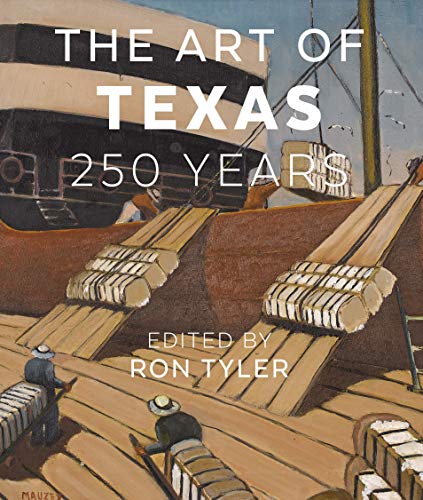
The Art of Texas: 250 Years is essential for anyone collecting Texas art. It provides the comprehensive historical and cultural context that makes Texas western art distinct from the broader category.
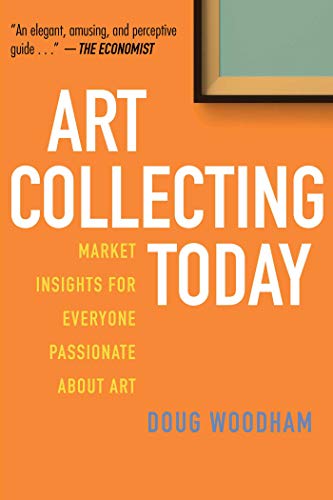
Art Collecting Today by Doug Woodham is a practical guide to the mechanics of buying art -- from navigating galleries and auctions to understanding pricing and negotiation.
The $12 Million Stuffed Shark by Don Thompson explains the economics behind the art market in a way that is both entertaining and genuinely useful for understanding how prices form and why certain artists appreciate while others do not.
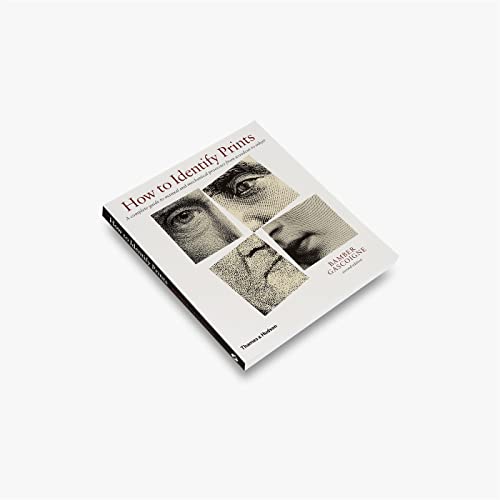
How to Identify Prints is invaluable if you are considering western prints, lithographs, or etchings. Understanding print techniques helps you distinguish valuable original prints from decorative reproductions.
For a broader look at building a collection with intention, our best art books for collectors covers additional essential reading.
Current Market Trends: What to Watch in 2026
The western art market is in a strong position heading into 2026. Here are the trends worth watching:
Classic over contemporary speculation. Works held for 10+ years are generating positive returns, while works flipped within 5 years lost roughly 5.7% annually in 2025. This is a market that rewards patience and genuine collecting over speculation.
Maynard Dixon's continued ascent. Dixon's market has been on a steep upward trajectory for a decade, with prices for major paintings moving from six figures to seven. His works on paper have followed, making them an increasingly attractive entry point before prices rise further.
The "New West" movement. Galleries like Altamira Fine Art in Jackson Hole and Scottsdale are championing contemporary artists who reimagine western themes with geometric abstraction, bold color, and modern perspectives. Ed Mell, Logan Maxwell Hagege, and Billy Schenck represent this movement, which is attracting younger collectors to the category.
Photography gaining ground. Western fine art photography is growing as an accessible collecting category, with strong demand for both historical documentation and contemporary landscape work.
Texas remains a powerhouse. The Briscoe Night of Artists generated $2.92 million in 2025, Heritage Auctions in Dallas handles significant volume, and Texas collectors continue to be among the most active buyers at the national auctions.
The overall U.S. art market rebounded 23% in 2025 to $3.17 billion in auction sales, the first growth after two years of decline. Western art's sell-through rates and price records suggest the category is outperforming the broader market.
If you have read this far, you are ready to start. Here is a practical sequence:
Visit museums first. Before you buy anything, see the best western art in person. The Sid Richardson and Amon Carter museums in Fort Worth are free and within driving distance of Austin. The Briscoe in San Antonio is equally accessible. Seeing authentic Remingtons, Russells, and Dixons in person calibrates your eye in a way that no book or website can match.
Attend an auction. Even if you do not plan to bid, watching a western art auction -- in person or online -- teaches you how the market works, what prices things actually sell for, and what generates competitive bidding versus what goes for estimate or below.
Start with what you love. The best collectors buy what moves them, not what they think will appreciate. If you are drawn to Dixon's spare desert landscapes, start there. If Russell's narrative action scenes speak to you, follow that instinct. Authentic passion for the work is what sustains a collection over decades.
Buy the best you can afford. One excellent work is worth more -- aesthetically and financially -- than five mediocre ones. This is especially true in western art, where quality differences within a single artist's output can be dramatic.
Build relationships. Western art is a community. Gallery owners, auction specialists, fellow collectors, and museum curators are generous with knowledge if you approach them with genuine interest. The western art world is smaller and more accessible than the contemporary art market, and personal relationships matter.
If you are in the Austin area and want to discuss western art, reach out to us. Whether you are looking to buy your first piece, sell inherited western art through our consignment program, or get an appraisal on pieces you already own, we are happy to help.
Frequently Asked Questions
Is western art a good investment?
Western art has shown strong returns for collectors who buy quality and hold for 10+ years. The 2025 auction season showed record sell-through rates and new price records for multiple artists. However, works flipped within 5 years tend to lose value. Buy what you love, buy the best quality you can afford, and plan to hold -- that combination has historically produced the best outcomes in this category.
Western art has shown strong returns for collectors who buy quality and hold for 10+ years.
How can I tell if a Remington bronze is authentic?
Authentic Remington bronzes were produced between 1895 and 1918 only. They are numbered sequentially (1, 2, 3), not in "limited edition" format (3/100). They are rarely on marble bases. They have identifiable foundry marks. And they do not sell for $5,000. If any of these red flags apply, you are looking at a reproduction. For authentication, consult the Frederic Remington Art Museum or a recognized Remington scholar.
What is the most affordable way to start collecting western art?
Original prints, works on paper, and small paintings by emerging regional artists offer the best quality-to-price ratio. You can find genuine original works by talented artists in the $500-$3,000 range. Limited-edition prints by established artists (Howard Terpning, Ed Mell) offer another entry point. Avoid mass-produced reproductions sold as "collectibles" -- they rarely hold value.
You can find genuine original works by talented artists in the $500-$3,000 range.
Where are the best places to see western art in Texas?
The Sid Richardson Museum and Amon Carter Museum in Fort Worth (both free), the Briscoe Western Art Museum in San Antonio, and Heritage Auctions preview exhibitions in Dallas. From Austin, Fort Worth and San Antonio are both easy day trips that will expose you to world-class western art collections.
How do I care for a western oil painting?
Keep it out of direct sunlight, maintain stable temperature and humidity (65-75 degrees, 40-50% humidity), dust gently with a soft natural-hair brush, and never attempt to clean or varnish a painting yourself. For cleaning or restoration, always use a professional conservator. Our guides on art care and art cleaning cover the specifics for every medium.
Share
Austin Art Insider
Free weekly guide to galleries, exhibitions & collecting in Austin.
Consignment
Have Art You Want to Sell?
Free appraisals, zero upfront fees, nationwide service from Austin, Texas.